That very day, the first day of the week,
two of Jesus’ disciples were going to a village seven miles from Jerusalem called Emmaus,
and they were conversing about all the things that had occurred.
And it happened that while they were conversing and debating,
Jesus himself drew near and walked with them,
but their eyes were prevented from recognizing him.He asked them,
“What are you discussing as you walk along?”
They stopped, looking downcast.
One of them, named Cleopas, said to him in reply,
“Are you the only visitor to Jerusalem
who does not know of the things that have taken place there in these days?”
And he replied to them,
“What sort of things?”
They said to him,
“The things that happened to Jesus the Nazarene,
who was a prophet mighty in deed and word
before God and all the people,
how our chief priests and rulers both handed him over
to a sentence of death and crucified him.
But we were hoping that he would be the one to redeem Israel;
and besides all this, it is now the third day since this took place.
Some women from our group, however, have astounded us:
they were at the tomb early in the morning
and did not find his body;
they came back and reported
that they had indeed seen a vision of angels
who announced that he was alive.
Then some of those with us went to the tomb
and found things just as the women had described,
but him they did not see.”And he said to them,
“Oh, how foolish you are!
How slow of heart to believe all that the prophets spoke!
Was it not necessary that the Christ should suffer
these things and enter into his glory?”
Then beginning with Moses and all the prophets,
he interpreted to them what referred to him
in all the Scriptures.As they approached the village to which they were going,
he gave the impression that he was going on farther.
But they urged him,
“Stay with us, for it is nearly evening
and the day is almost over.”
So he went in to stay with them.
And it happened that, while he was with them at table,
he took bread, said the blessing, broke it, and gave it to them.
With that their eyes were opened and they recognized him,
but he vanished from their sight.Then they said to each other,
“Were not our hearts burning within us
while he spoke to us on the way
and opened the Scriptures to us?”
So they set out at once and returned to Jerusalem
where they found gathered together
the eleven and those with them
who were saying,
“The Lord has truly been raised and has appeared to Simon!”
Then the two recounted what had taken place on the way
and how he was made known to them
in the breaking of the bread.-Luke 24:13–35
Third Sunday of Easter Gospel Reflection
The Uniqueness of Christ and the Liturgy
For the Third Sunday of Easter, we have received a collection of readings that underscore one of the most profound truths of our faith: that Our Lord Jesus Christ’s life with us was a singular, unique, exceptional, and extraordinarily transformative event. There was no one like Him, nor will there ever be, because everything that our Eternal Father needed to communicate through His Son had been spoken, and there would never be a need for another sacrifice for the redemption of our sins.
Pertaining to this profound truth is also the reality that, since the liturgy communicates the fullness of Christ Jesus, the liturgy is therefore also a singular, exceptional, and extraordinarily transformative event.
Pentecost and the Proclamation of Truth
At Pentecost, following the filling of the Apostles with the Holy Spirit and their subsequent commencement of speaking in various tongues, some among them experienced confusion concerning how individuals from different nations and speaking different languages could understand each other.
According to Acts 2:10–13, it is recorded:
“They were all astounded and bewildered, and said to one another, ‘What does this mean?’ Yet, others, dismissing the phenomenon, responded skeptically, ‘They have had too much new wine.’”
The current First Reading from Acts 2:14, 22–33 continues:
“Then Peter stood up with the Eleven, raised his voice, and proclaimed to them, ‘You who are Jews, indeed all of you staying in Jerusalem. Let this be known to you, and listen to my words.’”
Interestingly, the reading omits Peter’s humorous clarification in the next verse:
“These people are not drunk, as you suppose, for it is only nine o’clock in the morning.”
Peter’s Sermon: Bold and Transformative
The First Reading resumes with Peter’s sermon, where he boldly proclaims:
“Jesus the Nazarene was a man acknowledged by God through mighty deeds, wonders, and signs… This man, handed over according to God’s predetermined plan and foreknowledge, you condemned and crucified… However, God raised him from the dead.”
Peter highlights how the earthly kingship of David has been fulfilled in the eternal kingship of Jesus Christ.
Two things stand out in Peter’s sermon:
1. The Power of Prophecy Fulfilled
Peter uses the prophecies of Joel and David to show that the coming of Christ was one-of-a-kind, extraordinary, and deeply transformative. There may not have been a more powerful sermon in Christian history.
2. The Boldness of His Tone
Peter speaks directly and forcefully:
“You Jews, you Israelites—you are the ones who used lawless men to crucify Jesus.”
When the people heard this, they were “cut to the heart” and asked, “What are we to do, my brothers?”
Peter, inspired by the Holy Spirit, does not soften his message. Instead, he proclaims:
“Repent and be baptized, every one of you, in the name of Jesus Christ for the forgiveness of your sins; and you will receive the gift of the Holy Spirit.”
About three thousand people were baptized that day.
The Danger of Watering Down the Faith
This boldness reveals an important lesson: when we fail to present the faith as singular, unique, and transformative, we diminish something that comes directly from God.
Today, we are often more concerned about tone than about truth. Yet Peter’s example reminds us that truth, spoken with conviction, has the power to pierce hearts and transform lives.
The Precious Blood of Christ
The Second Reading (1 Peter 1:17–21) reinforces this same truth:
We were not redeemed by silver or gold, but “with the precious blood of Christ as of a spotless unblemished lamb,” who was “known before the foundation of the world but revealed in the final time for you.”
Our redemption is not ordinary—it is extraordinary and entirely the work of God.
The Road to Emmaus: A Liturgical Encounter
Luke’s Gospel presents the encounter on the road to Emmaus—a uniquely transformative moment.
As Jesus walks with the disciples, explains the Scriptures, and ultimately breaks bread with them, their eyes are opened. They recognize Him and later reflect:
“Were not our hearts burning within us while he spoke to us on the way and opened the Scriptures to us?”
This journey mirrors the structure of the Mass:
- Scripture readings
- A homily (Christ explaining the Scriptures)
- The breaking of bread
- Recognition of Christ
- A sending forth (dismissal)
At Pentecost, the people were “cut to the heart.”
At Emmaus, the disciples’ hearts were “burning.”
Those cut to the heart were baptized.
Those whose hearts burned went out to share the Good News.
Both are examples of extraordinarily transformative encounters with Christ.
Living the Truth Boldly
Our faith, our religion, and our liturgy proclaim the truth of Jesus Christ—the eternal Word made flesh.
He will come again in glory, and He is present among us daily in the sacred signs of bread and wine.
There is nothing to be ashamed of in embracing the uniqueness and transformative power of our faith. Christ is the same yesterday, today, and forever—yet wonderfully singular and unmatched.
Let us emulate Saint Peter’s courage, boldly sharing this divine truth through our words and the witness of our lives, inspiring others to encounter the love of Christ.
Looking for more Catholic reflections like this one?
The Liturgical Sense of The Readings at Mass – Year A by David L. Gray offers a transformative journey through the Sunday Mass readings and Holy Days of Obligation, inviting both clergy and laity into deeper communion with the living Word and the rhythm of the Catholic liturgy. Rooted in the Liturgical Sense of the Scriptures, this book reveals the dynamic and mutual illumination between the Word of God and the ritual life of the Church, allowing every reading and prayer to draw the faithful further into the mystery of Christ and the mission of the Church.
Spanning the full structure of the Mass, from the Opening Rite to the Concluding Rite, Gray’s thoughtful commentaries provide a lens through which the Mass and the Bible mutually interpret and enliven one another. Readers are encouraged to go beyond passive attendance and embrace active participation in the sacred mysteries. This volume is more than a guide to Scripture—it is an invaluable resource for homily preparation, personal study, group discussion, and spiritual renewal, challenging all who approach it to contemplate more deeply, pray with greater sincerity, and live with intentionality as missionary disciples.
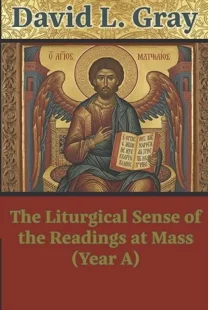
Image:https://www.flickr.com/photos/130321091@N06/17100859891