Christ said, “by their fruits you shall know them” (Matthew 7:16). The Catholic Church, founded by Christ, possesses many fruits proving its lineage. Among these are miraculous signs that give hope to the faithful. One miracle I want to touch on in this article is the bodies of holy men and women discovered to be incorrupt.
But what does “incorrupt” mean? Simply put, it refers to a body that, after death, does not undergo the normal process of decay. While this does not guarantee the body will remain preserved forever, the decay is remarkably delayed. To assess incorruptibility, the body is examined by medical professionals to determine whether there is any natural cause for the slowed decay. Sometimes, it isn’t the whole body that is incorrupt, but just a certain body part like a heart. For St. Anthony of Padua, the renowned preacher, it was his tongue.
“In De Cadaverum Incorruptione…Pope Benedict XIV stated that an incorruptible body should only be considered miraculous when its lifelike condition is maintained for a great period of time.” (Rosa, Pillar Catholic, n.d.)
A List Of Incorrupt Catholic Saints
There are many saints found to be incorrupt when their remains were exhumed. A few from this list are:
Saint John Bosco
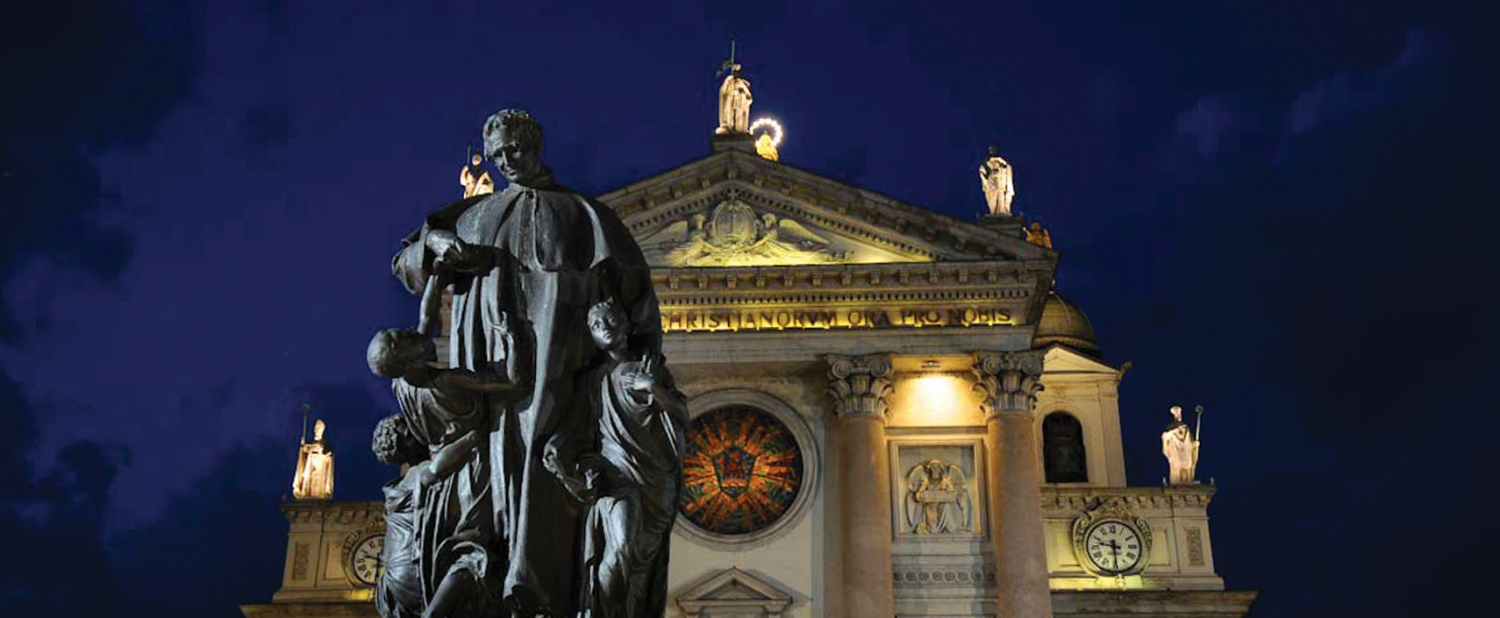
Saint John Bosco, known for his care of the youth, was found incorrupt when his remains were set to be transferred in 1929 (forty-one years after his death). It is reported that his skin retained its natural color and suppleness, his features remained recognizable, and even his clothes showed no signs of deterioration. When scientists searched for a way to explain this, they came away empty-handed. You can still view his body today at the Basilica of Our Lady Help of Christians in Turin.
Saint Bernadette
Saint Bernadette was the young girl from France blessed to receive visions of Our Lady of Lourdes. Despite the fame such publicity brought her, she continued to live her life humbly, later becoming a religious sister, until her death.
On September 23, 1903, thirty years after her death, St. Bernadette’s body was exhumed as part of the canonization process; (this is when the Pope declares a deceased person is a saint). And upon her exhumation, her body was found to be incorrupt with no odour, as would be expected with a decaying body.
Saint Rita of Cascia
The holy wife, mother, and widow turned nun, Saint Rita of Cascia was also found to be incorrupt.
Saint Rita, one of the saints who received the stigmata (bodily marks corresponding to Our Lord’s wounds during His Passion), was found remarkably preserved, despite not being properly entombed, nearly six centuries later. Not only was her corpse incorrupt, but it smelled sweetly perfumed. The aroma was emitted constantly for a while, but now is reported only intermittently.
It is said that one day in prayer, she received a thorn implanted in her forehead that remained with her for fifteen years until her death at seventy-six. This wound gave off such a foul odor, that many even avoided her. But when she died, her room was filled with a perfume scent and the wound emanated light. It is remarkable that such a perfume scent wafted off her incorruptible body too.
Saint Vincent de Paul
Saint Vincent de Paul was a priest who devoted himself to serving the poor and in-need. His body was found to be incorrupt when exhumed in 1712, but when exhumed again 25 years later, it was found that a flood had damaged his body except for his heart which remained incorrupt and is still preserved to this day.
Saint Catherine Laboure
Saint Catherine Laboure was a saint who received revelations pertaining to the miraculous medal. She died December 32, 1876. Her body was exhumed twice after her death in 1933 and 1939 and each time, her body was found to be incorrupt.
Saint Cecilia
Saint Cecilia was said to be the first widely recognized incorruptible saint of the Catholic Church. When Pope Paschal was in the process of transferring relics of the martyrs to basilicas in town to prevent desecration, he discovered Saint Cecilia’s tomb. She was in a coffin of cypress wood, appearing exactly as tradition described her, with wounds on her throat and at her feet—cloths stained in her blood.
My Personal Reflection On Incorrupt Catholic Saints
I have long wished I could visit the incorruptible saints in person, especially those I am strongly devoted to, like Saint John Bosco, whose example has shaped how I parent my children, or Saint Rita, who has seemed to answer quite a few of my prayers. To see their bodies appearing as if they were just asleep would be an amazing experience.
For the faithful, the incorrupt bodies of these saints serve as a powerful witness to the resurrection of the body that is to come. They remind us of God’s infinite power and point toward the eternal life Christ promises us if we are faithful to Him. I find these miracles help me reflect more deeply on the hope of heaven and on the importance of caring for the body God has given me, for our bodies, too, are gifts from Him. They are not just temporary vessels that we will discard. Our souls will, in fact, one day be reunited with our bodies, as Christ promised.

Sources:
- Brockhaus, Hannah. “What Is Incorruptibility? Here’s What You Need to Know.” Catholic News Agency, May 25, 2023.
- “When It Comes to Bodies, Just How …” Pillar Catholic. [Date unknown].
- “Incorrupt Saints.” Tekton Ministries. [Date unknown].
- “Saint John Bosco and His Incorrupt Body.” Saints Catholic Blog, June 2024.
- “St. Bernadette.” St. Bernadette Singapore. [Date unknown].
- “St. Rita of Cascia: One of the Incorruptibles.” Tan Direction, [Date unknown].
- “The Legacy of Catherine Laboure.” ArchMD Magazine. [Date unknown].
- “Was St. Cecilia the First Saint with an Incorrupt Body?” Aleteia, November 21, 2024.
Image: https://commons.wikimedia.org/wiki/File:Visit_of_the_St_John_Bosco_relic.png