Candles are Practical
The word candle comes from the Latin “to burn.” Candles have been used since human beings have been able to start fire. Rudimentary wicks were encased in wax or animal fat and burned for light in the dark hours of the day. Oil candles were also made from pottery which held a reservoir of oil and a small wick. Candles had a practical purpose, as electricity is exceptionally new in relationship to the course of history. It was also not appropriate to have to start a large fire every time you wanted some light.
If you have ever lit a candle near a baby, then you can see how magnetic the firelight can be to the human brain. Even with little thought or comprehension, we like to look at fire. It draws our attention. Candles have been used in worship for millennia, in Judaism and in paganism. Since the beginning of Catholic worship, candles were used. There were certainly candles at the Last Supper, being a Passover meal.
Candles are Symbolic
Processions
Besides providing light, candles are used symbolically. In the early Church, it is recorded that candles were used even when artificial light was not necessary. Outside of the Church, in the Roman Empire, high dignitaries were led around in procession with lit taper candles. This tradition was carried on by acolytes carrying lit candles when the priest processed in and out of the Mass, and during extra-liturgical processions. From early days, candles were lit and carried to the ambo from which the deacon read the Gospels. St. Jerome commented on this saying that the Gospel candles were lit “not indeed to put darkness to flight, but as a sign of joy.”
Paschal Candle
Candles feature heavily in the Easter Vigil, likely since the days of the Apostles. One such candle that is a sign of Christ is the Paschal Candle. This large pillar candle is lit from the Easter fire and carried in procession into the church. Then, smaller handheld candles are lit from this large candle. The Paschal Candle is then lit for the celebration of Baptism, Confirmation, Eucharist (during the Easter Season), and during Funeral Masses. From the Paschal Candle is lit the smaller Baptismal Candles presented to the newly baptized by their godfather.
Excommunication
The lit candle is part and parcel of Catholicism. In fact, when a heretic, schismatic, or apostate was officially excommunicated, the bishop would ring a bell, close a holy, book, and snuff out candles by putting the light into the ground. This symbolized that they were cut off from the light of Christ.
Reconciling of Penitents
On Holy Thursday, there used to be a ritual where penitents would come to the door of the church with lit candles. The bishop would invite the penitents to “Come!” three times after giving a lengthy address calling the penitents to repent. This shows that in those who have sorrow for their sins, the light of Christ is rekindled even before they reenter into communion with the Church.
Dedication of a Church and Blessing of Cemeteries
There are other times in the life of the Church where candles are used in a symbolic way. During the dedication of a new church and during the blessing of cemeteries, candles are blessed and used. The first part of blessing of candles from the blessing of cemeteries shows us the symbolism of candles in both cases: “Bless these light, Lord; may they remind us of Jesus who is the light of the world. By your grace, may we always recognize your light in our lives…”
Candles Draw Our Attention
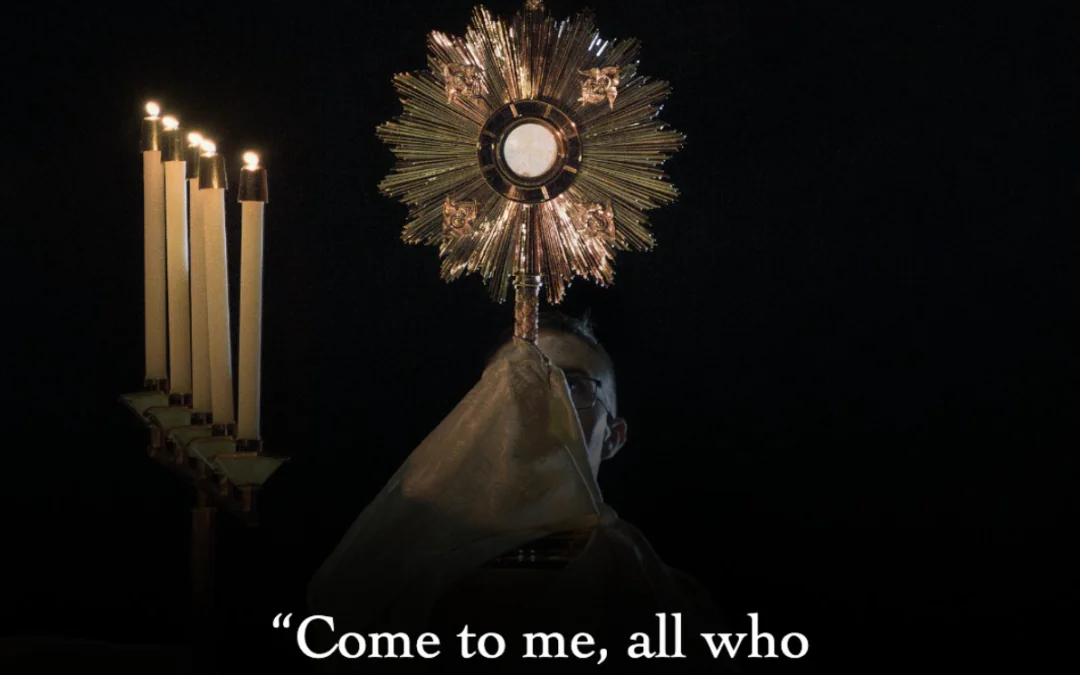
Building upon their symbolic use, candles also help to physiologically draw our attention. The firelight flickers and pulls in our awareness. Therefore, there is a red lamp which is lit next to a tabernacle. It allows us to know briefly that the tabernacle contains the consecrated Blessed Sacrament. It other words, the candle draws our attention to the presence of our Eucharistic Lord.
In the same way, candles are placed by the tabernacle and on the altar. Christ becomes present through the Holy Mass by the words of consecration. To add to the solemnity of the liturgical action and draw our attention to the altar, candles are lit. During solemnities (like each Sunday), there are six candles lit. On ferial days, memorials, and lesser feasts, there might only be two or four candles lit. If the bishop is present at the Mass, then there are seven candles on the altar to symbolize the seven pillars of wisdom mentioned in Proverbs 9:1.
Devotional Use of Candles
During the Sacred Liturgy, candles often represent or point us towards our Lord Jesus Christ. But what about outside of the Mass and the other Sacraments? Do candles have any other special usage for Catholics? They do!
Like the way that candles in the Mass lend solemnity, candles are sometimes placed in front of shrines to the Blessed Virgin Mary or one of the other saints. This is to show honor, but not adoration, of course. This is an act of special devotion and a way to externalize our love and respect.
Other candles are known as votive candles. Usually racks for votive candles are placed in little alcoves or shrines in a church. Though it is not overly defined, the practice is ubiquitous. There are no right or wrong ways to light votive candles. The Catholic Encyclopedia states this devotion well by saying, “The candle burning its life out before a statue is no doubt felt in some ill-defined way to be symbolic of prayer and sacrifice.” When we light candles in a votive candle rack, we call to mind our prayer intention and the flames symbolize our desire.
Over 115 Of The Best Catholic Gifts

Photo by Josh Applegate on Unsplash