One of the best ways to enrich your prayer life is to pray the gospel reading personally. A great way of doing this is using the “Lectio Divina”; this is a powerful method which we explain here.
We hope that it helps you in your personal prayer and that it serves as a resource that you can share with your apostolate.
Gospel Of Luke 6:28-36
Jesus took Peter, John, and James and went up the mountain to pray. While he was praying his face changed in appearance and his clothing became dazzling white. And behold, two men were conversing with him, Moses and Elijah, who appeared in glory and spoke of his exodus that he was going to accomplish in Jerusalem.
Peter and his companions had been overcome by sleep, but becoming fully awake, they saw his glory and the two men standing with him. As they were about to part from him, Peter said to Jesus, “Master, it is good that we are here; let us make three tents, one for you, one for Moses, and one for Elijah.”
But he did not know what he was saying. While he was still speaking, a cloud came and cast a shadow over them, and they became frightened when they entered the cloud. Then from the cloud came a voice that said, “This is my chosen Son; listen to him.” After the voice had spoken, Jesus was found alone. They fell silent and did not at that time tell anyone what they had seen.
A map is not the same as the region! We can be thinking of making certain decisions but until we put them into practice they will only ever be possibilities. We can imagine exploring a city, we can map out our route in our minds, but we don’t ever visit that city until truly we set out. Many times our decisions are nothing more than movies we play back to ourselves in our minds. They are pleasant or courageous desires we like to hide in without ever trying to make them reality.
The Gospel of Luke shows us Jesus at the crossroads of decision: he must choose between carrying out his decision to its final consequences or turning back. Perhaps it’s no coincidence that we find in this passage that same invitation from the Father to listen to his Son (“This is my chosen Son…”) that we had heard at his Baptism, which was a kind of investiture by the Father and acceptance of the mission by Jesus. Now in the moment of the re-decision, Jesus returns to the foundation of his mission: the obedience to the love of the Father.
After a period of confronting reality (from chapters 3 to 9 in Luke’s Gospel), the question returns. Jesus always remains fully free in the face of his mission. Jesus is never obligated. His freedom is where he chooses his obedience to the Father.
Therefore we find ourselves at the crossroads between the Baptism and Jerusalem, between the initiation and the goal of the journey. It’s fundamental, however, that we read this passage in relation to the last verses of Luke’s 9th chapter: “He resolutely determined to journey to Jerusalem” (9:51).
In the face of Jesus’ resoluteness, perhaps, for those of us stuck at a crossroads, our lives appear before us. We brood over and turn back on decisions that we have yet to make reality. We procrastinate before our responsibilities without ever truly assuming them to their ultimate consequences. We make the journey in our minds without ever getting on the train of reality.
The passage from Luke is built on this opposition between movement and stability, between leaving and staying: Jesus speaks with Moses and Elijah about his exodus, of his journey, of abandoning his securities. Peter on the other hand speaks of tents to stay in; he wants to stay there and make do with what he has.
In the moments of re-decision, when at a crossroads, Jesus looks to the Scriptures: Moses and Elijah, the Law and the Prophets – a phrase we often find in the Gospel and which refers to all of Scripture.
The time of the crossroads is also a time of darkness, a time in which the direction we must take is unclear. It is a time in which we feel enveloped in a frightening cloud, but at the same time, the cloud that envelopes us is also the cloud in which God speaks, inviting us to listen to his Son. Hopefully, we are not too busy playing back the magnificent movies we keep in our minds to hear him!
Featured Image: Tom Waterhouse @ Flickr

- Questions Children May Ask About Miscarriage — And Catholic Answers Parents Can Give
 Facebook Pinterest Gmail LinkedIn Print Friendly “Mommy, what’s wrong? Why are you crying?” There are some conversations you wish you didn’t have to have with your children. We had just announced our pregnancy 2 short weeks ago. After a traumatic visit to the ER, I lost my baby at 15 weeks. Not only did I… Read more: Questions Children May Ask About Miscarriage — And Catholic Answers Parents Can Give
 - Beyond the Click: eCatholic and The Catholic University of America on Finding True Fruitfulness in Digital Ministry
 Facebook Pinterest Gmail LinkedIn Print Friendly There is a palpable peace you feel in a well-run parish. When administrative foundations are set in place with care and intention, the noise of the work fades and what remains is a community built on systems that actually support those who serve. Having worked in ministry myself—both as… Read more: Beyond the Click: eCatholic and The Catholic University of America on Finding True Fruitfulness in Digital Ministry
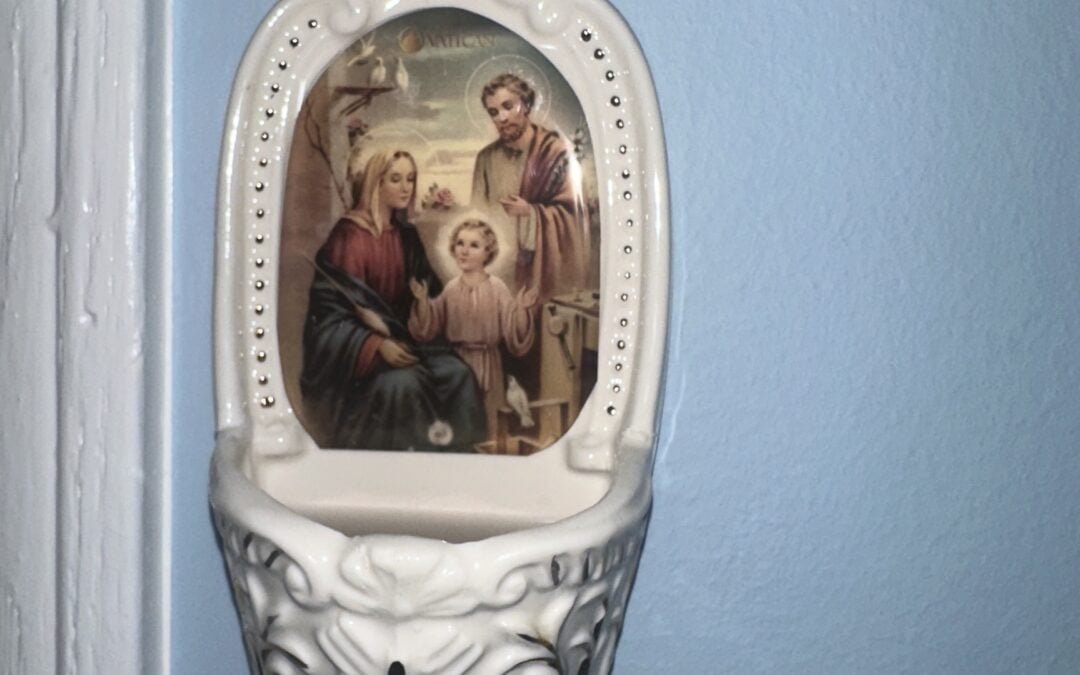
 - How To Create A Space For Prayer In Your Home
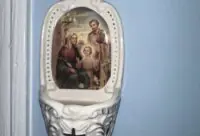 Facebook Pinterest Gmail LinkedIn Print Friendly “Be still and know that I am God!” – Psalm 46:11 Our homes are meant to be domestic churches. They are places where we live out our faith not only on Sundays, but in the ordinary moments of everyday life. Creating a prayer space in our home can be… Read more: How To Create A Space For Prayer In Your Home
 - 10 Things We’ve Learned In 30 Years Of Marriage
 Facebook Pinterest Gmail LinkedIn Print Friendly We often enter marriage with our own worldview, shaped by how we were raised, our DNA, our wounds, our culture, and our education, and we assume our spouse shares a similar worldview. These assumptions are precisely the fertile soil that gives birth to the weeds of misunderstandings… Read more: 10 Things We’ve Learned In 30 Years Of Marriage
 - Impact Of St. Carlo On Today’s Young Catholics
 Facebook Pinterest Gmail LinkedIn Print Friendly The Race and St. Carlo Acutis St. Carlo Acutis died in 2006 at age 15 and is our first millennial Saint. Known for promoting the Eucharist as the highway to heaven, Carlo brings simple reason to our complicated world. St. Carlo is nicknamed ‘God’s Influencer’ due to his use… Read more: Impact Of St. Carlo On Today’s Young Catholics