For the last few years, a group has released a collection of some of the most spectacular and impressive athletic feats of the year.
The series is called: “People are Awesome” and this year, like every other, they have put together an outstanding compilation.
I have found these types of videos to be useful when teaching religion for two reasons: first of all, the amazing scenes are evidently appealing; second is the fact that they speak, between the lines, of the greatness of the human being and the depth of his/her desires.
People Are Awesome
Apostolic Elements
When I see videos such as these, I can’t help thinking that the human person is a spiritual being. One might ask, how did you jump to that conclusion? I think that to really understand, we need to try to comprehend not so much what is done in the video, but rather why it is done. Why don’t we conform ourselves to mediocrity? Why not scale a tiny mountain instead or perhaps jump a medium size ramp? Why are we willing to put everything on the line, longing for the heights of perfection? What is it that pulls at us when we look upon the tallest ramp, the most imposing mountain, the most unbelievable jump?
If the human person were truly a mere biological and material organism, these types of inquiries would be absurd. What does cliff jumping have to do with the instinctual urge for self-preservation? When was the last time you saw a dog launching itself off a cliff trying to fly? It’s safe to say that natural beings tend to accept their limits. Why don’t we? What mystery lies hidden amongst the folds of those tissues and tendons?
I’m not pretending to put forward this video as some kind of “ultimate proof” of our spiritual nature, but I do think that it helps to pose the question: if natural beings, inclining always towards a certain harmony, remain within their limits, then man registers as some kind of anomaly in the system. That is, unless the longings and desires of greatness refer to limits different from those of the natural world. Perhaps all the “record-breaking” and fantastic stunts that appear to surpass all limits are, in reality, our attempts at discovering those authentic limits, those that go beyond our daily conception and reveal our authentic place in this existence.
Don’t forget to follow us on Facebook and Twitter!

- From Caution To Communion: How God Uses Family Tension To Heal Us
 Facebook Pinterest Gmail LinkedIn Print Friendly Most people do not withdraw from relationships because they are unloving.They withdraw because they are wounded. In families especially, proximity can feel perilous. Wounded history accumulates like unspoken debt. Words linger long after they are spoken. Reactions calcify into rigid expectations. Soon we find ourselves tiptoeing around those we… Read more: From Caution To Communion: How God Uses Family Tension To Heal Us
 - 4th Sunday Of Lent Gospel Reflection John 9:1-41
 Facebook Pinterest Gmail LinkedIn Print Friendly This reflection is an excerpt from The Liturgical Sense of the Readings at Mass (Year A). Click here to purchase! As Jesus passed by he saw a man blind from birth.His disciples asked him,“Rabbi, who sinned, this man or his parents, that he was born blind?”Jesus answered,“Neither he nor his parents… Read more: 4th Sunday Of Lent Gospel Reflection John 9:1-41
 - As A Catholic Parent, Here’s How I Guide My Kids When They’re Afraid
 Facebook Pinterest Gmail LinkedIn Print Friendly Most of our fears as young kids revolve around nighttime. As we grow up, the tools we’re taught stay with us. Whether you’ve got young ones or older ones (or fears yourself), you can keep it simple with these ways my husband and I fight fears with our kids. What… Read more: As A Catholic Parent, Here’s How I Guide My Kids When They’re Afraid
 - How Many Catholics Have Won the Nobel Peace Prize?
 Facebook Pinterest Gmail LinkedIn Print Friendly Throughout history, Catholics—both religious and lay—have actively engaged in efforts to end war, poverty, hunger, and injustice. From vastly different disciplines and corners of the world, they have placed their lives at the service of peace, following Jesus’ command: “Blessed are the peacemakers, for they shall be called children… Read more: How Many Catholics Have Won the Nobel Peace Prize?
 - 3rd Sunday Of Lent Reflection: Do You Trust Jesus?
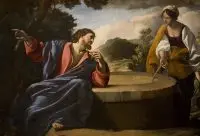 Facebook Pinterest Gmail LinkedIn Print Friendly Jesus came to a town of Samaria called Sychar, near the plot of land that Jacob had given to his son Joseph.Jacob’s well was there.Jesus, tired from his journey, sat down there at the well.It was about noon. A woman of Samaria came to draw water.Jesus said to her,“Give me… Read more: 3rd Sunday Of Lent Reflection: Do You Trust Jesus?