Of the seven sacraments instituted by Jesus Christ to make us holy, the Eucharist alone is called “the Most Blessed Sacrament”, for it not only conveys the graces that flow from Jesus, but gives to the recipient Jesus Himself – His Body, Blood, Soul, and Divinity. At Mass, the elements of bread and wine consecrated by a priest, through the action of the Holy Spirit, become Jesus Christ. Catholics believe that the Eucharist is the true presence – not a symbol – of Christ’s actual Body and Blood.
Form, Matter, and Minister of the Eucharist
At Mass, Catholics recreate the events of the Last Supper, when Jesus took bread and wine, blessed them, and declared to His apostles, “This is My Body…This is the chalice of My Blood”. For the Eucharist to be celebrated properly, the elements to be consecrated must be unleavened wheat bread and pure wine from grapes, which is mixed with a small amount of water during the liturgy. The priest or bishop must pray that the Holy Spirit come down upon the bread and wine, a prayer called the epiclesis, followed by the words that Jesus used to institute the sacrament. When a validly ordained priest performs these actions at the Mass with the intention to consecrate the elements, they become the Body and Blood of Christ that produce the real effect of grace within the soul of the recipient.
The Presence of Christ
It is most important to understand that the Eucharist is truly the Body and Blood, Soul and Divinity of Christ. Our Lord instituted this sacrament as a way of nourishing our spiritual life, going as far as to say to His followers, “Unless you eat my flesh and drink my blood you have no life in yourselves”. The Eucharist would have no life-giving effect upon the faithful if it were merely a symbol of Christ and not Christ Himself. In His love, Christ willed to remain with His people physically even after His ascension into heaven so that the faithful would always have “a memorial of the love with which He loved us ‘to the end’”. Therefore, He gave us a sacrament which would allow us to receive Him “in truth” and in fullness – the same Jesus who was born of the Virgin Mary, the same Christ who died, the same Lord who rose from death and reigns forever.
Christ is fully, completely present in every part of the consecrated Eucharist for as long as the visible forms of bread and wine remain intact. It is impossible to separate “the blessed and glorious body of Christ” into parts, or to divide His Body from His Soul or Divinity. Furthermore, to receive this truly present Christ, the recipient must believe that He is present – this involves the gift of faith! Since this earthly life is one of “wayfaring”, Christ does not make Himself sensibly present in the Eucharist; rather, He grants the gifts of faith and love so that the soul may recognize and commune with Christ “in the breaking of the bread”.
The Fruits of the Eucharist
The Eucharist can produce great spiritual fruit in the life of the soul who receives it with the proper disposition, namely, without any unconfessed mortal sin, along with the belief that Christ is really present in the sacrament. The Blessed Sacrament, because it is Jesus, is alone able to give the life that Jesus promises to those who would eat and drink of Him: it causes the soul to live in Jesus, and He in the soul. The sacrament causes less serious sins to be wiped away and keeps the faithful person away from future mortal sin by attaching the person more intimately to Christ.
The Eucharist brings members of the Church together with one another as they celebrate and offer the Lord’s sacrifice. It enables them to more readily embrace the service of their neighbor, especially the poor. Lastly, Christ in the Eucharist offers the Church an “anticipation of heavenly glory” as believers recognize in the Eucharist the foretaste of eternal union with Jesus; thus, it is the “food that makes us live forever”.
The Eucharist is truly the “Most Blessed Sacrament” because it gives us Jesus really and wholly. It is the most complete and intimate way that the soul can commune with Him in this life. The validly celebrated and properly received Eucharist produces grace in the soul that unites it more firmly to God, detaching it from sin and self. In this sacrament, Jesus gives Himself to the Church as food to strengthen us as we daily live in the hope of being united with Him eternally. Jesus said, “the bread which I shall give is my Flesh for the life of the world.” Receive Him soon and have His holy life within you!

- Catechism of the Catholic Church (CCC) 1330.
- CC 1329-30, 1339.
- Haffner, Paul. The Sacramental Mystery, p. 21.; Cyril of Jerusalem, Mystagogical Catechesis V, 7.
- CCC 1353.
- Haffner, pp. 16-18.
- Bonaventure, Breviloquium VI.9.2.
- John 6:53; Mystagogical Catechesis IV, 4.
- CCC 1390.
- “Paschasius Radbertus” (lecture).
- Breviloquium VI.9.5.
- Breviloquium VI.9.4, 6; CCC 1351, 1385.
- Haffner, p. 20.
- Mystagogical Catechesis IV.4; CCC 1391.
- CCC 1394-97, 1399, 1402, 1405.
- Books On The Eucharist:
- Christ, Science, and Reason: What We Can Know about Jesus, Mary, and Miracles by Fr. Spitzer
- Cardiologist Examines Jesus: The Stunning Science Behind Eucharistic Miracles
- 33 Days to Eucharistic Glory
- Heavenly Hosts: Eucharistic Miracles for Kids (Catholic Stories for Kids)
- The 7 Secrets of the Eucharist
- Jesus and the Jewish Roots of the Eucharist: Unlocking the Secrets of the Last Supper
- The Lamb’s Supper: The Mass as Heaven on Earth
- The Divine Encounter: Meeting Jesus in Eucharistic Adoration
-
His Heart Beats For Us In A Small Tabernacle And Floods Us With…
Facebook Pinterest Gmail LinkedIn Print Friendly In the heart of Jesus, which was pierced, the kingdom of heaven and the land of earth are bound together. Here is for us the source of life. This heart is the heart of the Triune Divinity, and the center of all human hearts… It draws us to itself […]
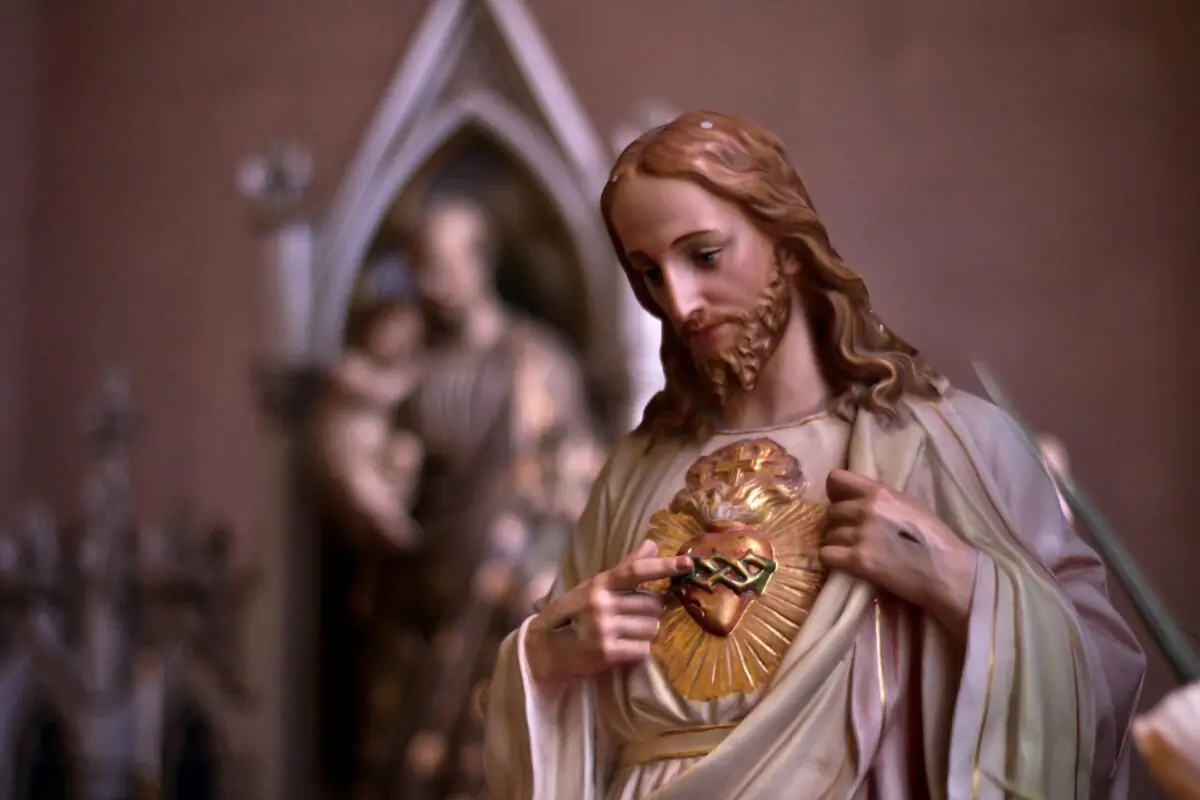
Eucharist And Sacred Heart: Source Of Mission And Love
0 commentsFacebook Pinterest Gmail LinkedIn Print Friendly A central doctrine of Catholicism is the belief that the bread and wine consumed at Mass become truly Christ: his body, blood, soul, and divinity. While this truth is celebrated every Sunday, the Solemnity of the Most Holy Body and Blood of Christ offers a heightened focus through liturgy […]

Lord, My Soul Is In Love With Your Beauty
Facebook Pinterest Gmail LinkedIn Print Friendly Lord, My Soul Is In Love With Your Beauty | St. Therese More St. Therese Quotes Subscribe To Our Weekly Newsletter!Our weekly email newsletter includes links to our seasonal content so you can stay connected to the Church’s liturgical seasons and find simple ways to celebrate them […]
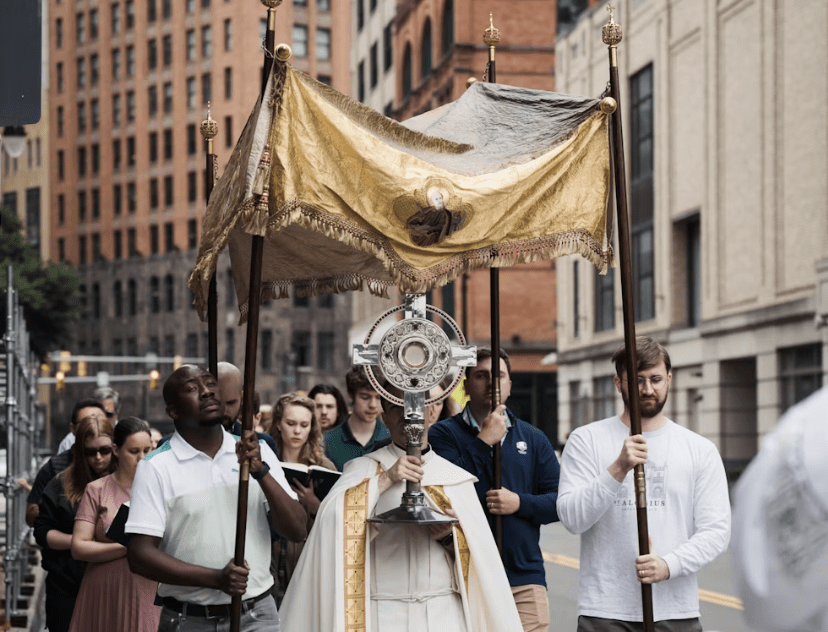
The Solemnity Of The Most Holy Body And Blood Of Christ: Reflection
0 commentsFacebook Pinterest Gmail LinkedIn Print Friendly Jesus said to the Jewish crowds: “I am the living bread that came down from heaven; whoever eats this bread will live forever; and the bread that I will give is my flesh for the life of the world.” The Jews quarreled among themselves, saying, “How can this […]

God’s Feast Day | A Corpus Christi Reflection By St. Peter Julian Eymard
Facebook Pinterest Gmail LinkedIn Print Friendly Corpus Christi! God’s Feast Day! What a beautiful name! God’s Feast Day and ours also! Let us see in what way. This feast day of God, which the Church calls Festum sacratissimi Corporis Christi, “Feast of the most sacred Body of Christ,” is the only day dedicated exclusively to […]
- Image: Photo by Josh Applegate on Unsplash