Saints come from all walks of life and each is unique in their own way. They are people who have made a total commitment to God and to their fellow man. Many do sacrifice themselves for others, displaying the ultimate love referenced by Jesus in the Gospel. Converts to Catholicism often make the best Catholics, and these saints prove that’s true. Here are five people who, in their own ways, excelled in their faith and ultimately achieved Sainthood.
5 Saints Who Were Converts
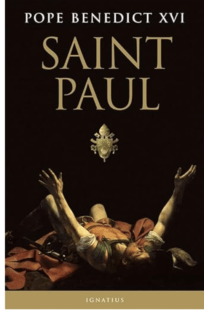
St. Paul (ca 5 BC to 5 AD-67 AD)
St. Paul, or Saul as he was originally named, was born in Tarsus, now modern-day Turkey. He was Jewish (his Greco-Latin name was Paul) and a Roman citizen. He studied under a well-respected Pharisee, Gamaliel the Elder, a teacher of Mosaic law. In Acts 5:38-39, Gamaliel cautioned against harsh treatment of Jesus’ followers, noting that His movement would die out on its own if it were not divinely inspired. Instead, Saul became a persecutor of Christians.
Saul was present at the stoning of St. Stephen, the apostle, the Church’s first martyr. He admitted responsibility for the imprisonment and executions of Christians as he sought the destruction of the early Christian Church.
While traveling to Damascus, he was knocked to the ground during a vision of Jesus. In the vision, Jesus demanded to know why Saul was persecuting Him. Saul was temporarily blinded by the experience. He was led into Damascus, where a Christian disciple named Ananias restored his vision by praying and laying hands upon him. It would forever change his life. He would evangelize both Jews and Gentiles, using his Latin name Paul, and establishing churches throughout the known world.
His conversion is considered a pivotal moment for Christianity and an example of God’s grace in working miracles. It also proves the importance of community in the Catholic Church, because he was ultimately accepted by the people he had persecuted, who were understandably afraid of him. The communal bond was mutual. He believed that we were all one in Christ. (Cor12:12-13,27)
St. Paul said, “ to live is Christ and to die is gain.” He was martyred by the Roman emperor Nero in 67 AD, according to Church tradition. The Catholic Church credits him with being the “Apostle to the Gentiles” (Acts 9:15) and the author of seven epistles in the New Testament. Six more letters are attributed to his followers, written in accordance with his teachings. He gave his life for Jesus Christ, whom he once persecuted. He was formally canonized in 1867, although his veneration dates back to the early Church, predating any formal process.
St. Augustine (354-430)
St. Augustine was born in 354 AD in what is now Algeria. His mother, Monica, was a devout Christian, while his father, Patricius, was a pagan who converted to Christianity on his deathbed. Augustine, a bright student, was intrigued by heresies, which are beliefs that oppose accepted Church doctrine. He struggled with his own morality until converting to Christianity in his early thirties, to the delight of his mother. While walking through a garden, a voice had prompted him to read the Bible. He opened it to St. Paul’s letter to the Romans (13:13-14), encouraging one to resist the flesh and welcome Jesus Christ.
Augustine became a great theologian and philosopher of the Catholic Church, as well as Bishop of Hippo in North Africa.
One of his most famous quotes is “ You have made us for Yourself, O Lord, and our heart is restless until it finds its rest in You,” from his famous work Confessions. He was formally declared a Saint in 1303 by Pope Boniface VIII.
St. Ignatius of Loyola (1491-1556)
Ignatius was born in Spain and became a worldly and wealthy young man. He was vain, temperamental, and engaged in duels. Seeking glory and reward, he joined the military at seventeen, only to be seriously injured at the Battle of Pamplona during the Italian War of 1521-1526.
While convalescing, he experienced a spiritual conversion after reading De Vita Christi by Ludolph of Saxony. The book tremendously affected his life, teaching him to meditate by employing Simple Contemplation Technique. He would meditate by mentally placing himself in Gospel stories, which inspired his famous work Spiritual Exercises.
In 1539, together with University of Paris classmates Peter Faber and Francis Xavier, Ignatius founded the Society of Jesus, or the Jesuit Order. He sent Jesuits across Europe to establish schools, colleges, and seminaries, and to engage in worldwide missionary work.
Ignatius believed that serving God was our primary duty in life and that detaching from worldly things would facilitate this goal. He used the phrase “Go, set the world on fire,” which the Jesuit Order still uses today. He was canonized by Pope Gregory XV in 1622.
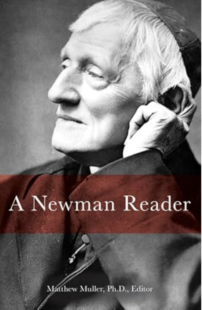
St. John Henry Newman (1801-1890)
Born in London, England, John Henry Newman was a priest and theologian in the Anglican Church.
He studied at Oxford’s Trinity College and was the vicar at the university’s church. He was a published author and prominent member of the Oxford movement, which paid tribute to the Church’s Fathers and challenged Relativism.
Newman’s research eventually led him to believe that the Roman Catholic Church was in the closest lineage to the Church founded by Jesus Christ. He was received into full communion with the Catholic Church in 1845 and was ordained a Catholic priest in Rome two years later. He ultimately served for seven years as rector of the Catholic University of Ireland.
In addition to over forty books, he wrote an essay called “On Consulting the Faithful in Matters of Doctrine” in 1859. Newman believed that the faithful played an important role in preserving and understanding Church Doctrine over time. It explored this very concept
as helpful during periods when the hierarchy is in error, as during the time of the Arian heresy controversy. During this period, the majority of bishops and even one pope actually sided with the heretics who were disputing the divinity of Jesus. Many lay people resisted, along with some clergy, until the Second Council of Constantinople ultimately repudiated the heresy.
He believed in papal infallibility and accepted Vatican I’s ruling on the matter. John Henry Newman was made a Cardinal in 1879, taking as his motto “Heart speaks to heart.” He believed that personal influence is the best way of spreading the Catholic faith. He was canonized in 2019 by Pope Francis.
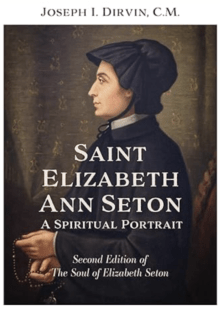
St. Elizabeth Ann Seton (1774-1821)
Elizabeth Ann Seton was born in New York City in 1774 to a prominent Episcopalian family. She married wealthy businessman William Magee Seton, and they had five children together. Financial problems arose when William’s health began to decline. He passed away from tuberculosis in 1803 while they were visiting Italy.
While in Italy, Elizabeth found herself drawn to the Catholic faith of their host family. Upon returning to New York, she converted to Catholicism to the consternation of her family and friends who ostracized her.
Financial problems continued, and Elizabeth established a boys’ school to support her family. There, she would experience more anti-Catholic bias as parents withdrew their children due to her faith.
In 1809, Elizabeth founded the first order of religious women in the United States, the Sisters of Charity of St. Joseph, who were dedicated to education. Based in Emmitsville, Pennsylvania, this was a Catholic starting point in an otherwise Protestant educational system.
Elizabeth’s teaching philosophy blended moral, religious, and academic training, serving as a template for the US Catholic school system. She believed that discipline and order were insufficient in educating children without treating them with kindness.
Elizabeth founded St. Joseph’s Academy Free School for girls in 1810, the first free school in the United States staffed by religious women. She was committed to providing education without parish funding to as diverse a student body as possible.
Ultimately, Elizabeth expanded her educational endeavors beyond Emmitsville in response to a growing need. She started the first Catholic orphanage in Philadelphia and educational programs in New York City. One of her most famous quotes was “Oh my God, forgive what I have been, correct what I am, and direct what I shall be.” She was canonized in 1975, and her Sisters of Charity congregation continues to live on today.
Conclusion
Any overview of these five saints of the Catholic Church must reflect their total commitment to God, after converting, and a consequent burning desire to spread the faith to others. This they accomplished by educating people and leading by example. Their commitment to Christianity manifested itself in various ways. Their inclusivity was grounded in their faith in the one true God. They looked to the physical and spiritual good of all people. In Catholicism, we are a community of believers united in the Body of Christ. We are all obligated to love and assist all people in getting home to heaven. The Communion of Saints, as we Catholics call it, is meant to include us, in this life, hopefully, but definitely in the next.