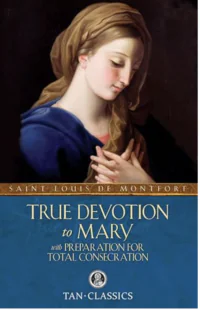
Inspired by saints like St. Louis de Montfort and St. John Paul II, I developed a deeper devotion to Our Lady, especially through practices like Total Consecration, and inspiration from the saints.
Mary’s Beauty
This journey showed me Mary’s three-dimensional beauty, a beauty beyond what we see or can outwardly perceive. Thus, I wish to explore three key aspects of her beauty—her immaculate soul, her obedient love, and her self-giving motherhood. I believe these will inspire us to find true beauty in our own lives. Drawing from saints such as Thomas Aquinas, who says, and I paraphrase, that beauty is that which pleases when seen, we will witness how Mary’s inner beauty truly captivates.
I. Her Immaculate Soul: The Foundation of Her Beauty
Mary’s immaculate heart and soul are the bedrock of her beauty. The Immaculate Conception teaches us this: from her very conception, Mary was preserved free from Original Sin. This was God’s singular grace, given because she was chosen to be the Mother of God. This unique privilege filled her soul with sanctifying grace, creating a perfect inner harmony that perfectly reflected God’s holiness. Mary’s freedom from sin allowed her soul to simply shine forth God’s purity, a truth that lines up with Ephesians 1:4, where we read about being chosen “without blemish.”
Finding Our Worth
In a world that constantly tells us beauty refers to external appearance, Mary’s pristine soul shows us something deeper, something lasting. Our society’s obsession with unrealistic physical standards often leaves us feeling inadequate, with low self-esteem, and even pushes us toward harmful choices. Mary’s inner purity, glowing with grace and reflecting God’s holiness, is a powerful antidote. Her example helps us redefine beauty. It starts within. It reminds us that our inherent worth, created in God’s image (Genesis 1:27), doesn’t depend on how we look. When we truly contemplate her purity, we find self-acceptance and a real appreciation for the priceless value of our own souls.
This truth isn’t just theoretical; I’ve seen it reflected in the lives of others, reminding me how true beauty can be seen without physical presence. For instance, I have a dear friend I first connected with online years ago. We’ve still never met in person. Yet, through countless video calls, phone chats, emails, and even simple texts, her inner peace is truly palpable. It’s not about her appearance, which I only see on a screen, but about the profound quietness she carries, the way she listens, and the steady, unwavering joy in her voice when we speak.
This quiet strength and serene presence are the beauty of a pure soul. It’s evident even across continents, even through digital communication. It makes me stop and think: if such beauty can be felt through fiber optics, imagine the power of a truly pure heart in person. It proves true beauty transcends any physical barrier, any superficial standard.
Purity Lived Out
So, how can we actually live out this purity in our daily lives?
Before bed, spend five minutes reviewing your day. Did you speak unkindly? Did you resist an impure thought or entertain a judgmental one? Make a mental note, ask for grace, and resolve to do better tomorrow. If you feel a nagging weight from a specific sin, seek out confession within the week. It’s like spiritual hygiene for your soul and a fresh start. When you catch yourself about to gossip, consciously bite your tongue and offer a silent prayer for the person instead.
Choose uplifting content over negativity online. And when you find yourself scrolling through social media, comparing your appearance or achievements to others, pause. Remind yourself that your worth isn’t in how many likes you get, but in being a child of God, uniquely and beautifully made. A pure soul shines with beauty, which improves our self-worth by reflecting God’s image, His inherent beauty.
Now that we’ve seen the pure beauty of Mary’s soul, let’s turn our gaze to another profound aspect of her beauty: her obedient love, expressed so powerfully in her “fiat.”
II. Her Fiat: The Beauty of Obedient Love
Mary’s “fiat”—her “yes” to God’s will at the Annunciation—is pivotal for understanding her unique beauty. When the angel Gabriel told her she’d be the mother of Jesus, Mary humbly responded, “Behold, I am the handmaid of the Lord; let it be done to me according to your word” (Luke 1:38). This simple yet profound statement reveals her complete surrender. She trusted in God’s wisdom and did not question how or when her divine maternity will come to be. By her “let is be done to me according to your word,” this denotes that she simply trusted and allowed God’s will to be manifest in His time.
This was an active obedience, born from pure love. Her humility and perfect alignment with divine grace show us why this blend of love and obedience is inherently beautiful. Mary’s fiat proves that true beauty is an inner disposition of the heart, not just something external, but a posture of childlike trust in the goodness of the Lord.
Finding Freedom in Surrender
Today’s society has a progressively narrow definition of beauty. It’s focused not only on external looks and control, but to complete self-reliance. This leads to widespread insecurity and distorted self-worth. The endless chase after an impossible ideal often breeds self-comparison and shame, even while trying to figure life out on our own.
Mary’s life offers a radical counterpoint: the beauty of surrender, humility, and trust. Her willing acceptance of God’s plan shows true beauty isn’t found in being in control, but in aligning our will with God’s. Fulton Sheen pointed out that her “yes” was an active, complete surrender that opened the door for Jesus to become man.
St. John Paul II also stressed Mary’s obedience. It wasn’t blind submission; it was a loving, intelligent response, a source of true freedom. When we follow Mary’s lead in surrendering, we move past superficial standards. We cultivate inner qualities that manifest peace and joy, finding freedom and our true worth in God’s plan rather than the fleeting approval of the world.
This powerful truth about finding freedom through surrender isn’t just an abstract concept. In recent years, my own journey involved surrendering to God’s will when I felt called to leave religious life. This was not a simple decision. It was a wrenching process, filled with sleepless nights and a profound sense of tearing away from a life I had envisioned. The tears flowed. The fear was real.
But through intense prayer and honest spiritual direction, I began to see a different path God was asking me to walk. Saying “yes” to that new, unknown path felt like a profound personal cost—letting go of a cherished identity and a clear future. Yet, in that very act of letting go, of choosing God’s will over my own deeply felt desires, I discovered a different kind of strength. I experienced a peace that surpassed understanding.
That difficult decision, strengthened and confirmed through prayer, reflects the beauty of Mary’s fiat: seeking to align one’s life with God’s plan, even when it involves significant personal cost. True beauty lies not in the comfort of our own plans, but in the surrender of our hearts to God’s will, no matter where it takes us.
Obedience Lived Out
So, how do we put this beautiful obedience into practice?
Facing a big decision? Spend 15 minutes each morning in quiet prayer for clarity, rather than immediately seeking advice from everyone or diving into endless online research. When a sudden setback hits—a job loss, a broken plan, a car problem—instead of panicking, take a deep breath. Say, “Lord, I trust You, even if I don’t understand this right now.”
Then, look for small, unexpected openings or “divine setups.” Someone cuts you off in traffic? Offer up that irritation for a soul in purgatory. Weekend plans canceled? See it as an invitation to quiet time or a chance to help someone else. Obedient love makes us more beautiful. It aligns us with God’s will, reshaping our perception of beauty to value inner disposition over external appearance.
Her “yes” is a model of beautiful surrender we can follow, leading to a more authentic and fulfilling sense of self.
Having seen the beauty of Mary’s obedient love, let’s now delve into the ultimate expression of her self-giving heart: her motherhood.
III. Her Motherhood: The Beauty of Self-Giving Love
Mary’s motherhood, both biological and spiritual, is the crowning glory of her beauty. It’s the beauty of love that embraces all humanity and lifts our own sense of worth. As Mother of God, she bore Christ. As a spiritual mother, she cares for all believers, a role highlighted when Jesus gave her to John at the foot of the cross (John 19:26-27). Her self-giving love for Jesus and for us is the ultimate expression of love, and because love is beauty, it is the ultimate beauty.
Finding Joy in Giving
Modern society’s obsession with youth, physical attractiveness, and money pushes a self-centered pursuit of fleeting ideals. This creates pressure and distorts our self-worth. It often leads to feelings of inadequacy and a constant search for validation from others. Mary’s self-giving love stands in stark contrast.
Her beauty shines from her unwavering commitment to serving God and others, from her “fiat” to the cross. She put others’ needs before her own, embodying selfless, sacrificial love—the very core of Christian love.
St. Louis Marie de Montfort called Mary the “surest, easiest, shortest, and most perfect way” to Christ. Fulton Sheen and countless saints similarly saw her as a powerful intercessor. When we understand Mary’s self-giving love, we feel empowered to embrace our own capacity for love and compassion.
Our worth isn’t defined by how we look or what we own, but by our ability to love and be loved. This frees us from what society demands. It helps us cultivate a true, authentic sense of self-worth. When we serve others, we find joy and fulfillment that outlasts all the world’s fleeting pleasures.
This fulfillment is deeply tangible. I’ve witnessed it firsthand in the incredible generosity of those closest to me. My dear friend recently gave birth to her seventh child. Despite her own frail health, which often leaves her exhausted, and the relentless demands of a large, busy household, she somehow manages to pour herself out for others.
I vividly remember when I needed surgery not once, but twice, within a short period. Knowing I lived alone, she insisted I recover at her home. For weeks, she cared for me with such tenderness, preparing meals, managing pain medication, and simply being present, all while juggling her newborn and six other children.
There were moments when I saw her eyes tired, yet she never complained. Her actions in those demanding circumstances weren’t just kindness; they were a profound act of self-giving love. They mirrored Mary’s boundless care for her Son and, ultimately, for us.
Love Lived Out
So, how can we radiate this transformative and self-giving love?
See a parent struggling with groceries? Offer to help. Visit an elderly neighbor who might be lonely, even for just 10 minutes. Volunteer at a soup kitchen once a month. When you hear gossip, change the subject or speak a kind word about the person instead. If someone offended you weeks ago and you still feel bitter, make a conscious choice to release the feeling. Write down what happened, acknowledge the hurt, then tear up the paper as a symbolic act of letting it go. Pray for that person.
Instead of focusing on your own perceived flaws, think about how you can use your talents to uplift someone else. When you see their joy, you’ll feel a deeper sense of purpose than any external validation could provide. Self-giving love reflects the beauty of Mary’s motherhood. It transforms our understanding of self-worth, teaching us to value service and love above all else.
Finally, let’s bring all these threads together and reflect on the profound implications of Mary’s beauty for our own lives. She is a true teacher, showing us how to live a life overflowing with grace and authentic beauty.
As St. Louis de Montfort wisely taught, “The more we abandon ourselves to Mary, the more we shall be united to Jesus Christ.” This path of entrusting ourselves to Our Lady is a journey of profound transformation. It calls us to embrace an interior beauty that reflects God’s own heart.
And as we embark on this path, what better way to seal our intentions than by lifting our hearts in prayer, asking Mary herself to guide us?
Let us pray:
O Holy Mary, mirror of Divine Beauty, pray for us. May we grow in the likeness of your purity, obedience, and love. Intercede for us, that we may embrace our own inherent worth and reflect the beauty of God in our lives. Amen.
More Catholic Books About Mary
Mary-Virgin, Mother, and Queen: A Bible Study Guide for Catholics
The Life of Mary As Seen By the Mystics
33 Days to Morning Glory: A Do-It-Yourself Retreat In Preparation for Marian Consecration
Jesus and the Jewish Roots of Mary: Unveiling the Mother of the Messiah
Walking with Mary: A Biblical Journey from Nazareth to the Cross
Behold Your Mother: A Biblical and Historical Defense of the Marian Doctrines
Other Catholic Resources About Mary
Image: Photo by Josh Applegate on Unsplash