Have you ever struggled to fully comprehend the concept of “holy abandonment” when it is discussed? I have personally experienced this, and even though I understand it better now, I still find it challenging to put it into practice. The idea of surrendering one’s will and desires to God can be daunting. It requires a deep level of trust and faith. While I know the many benefits of this spiritual practice, it can still be a difficult to let go of attachments to material possessions, personal goals, and desires. It can be even more difficult to embrace suffering , challenges, disappointments, and trials. Nonetheless, I continue to work towards living out the principles of holy abandonment by engaging in regular prayer and reflection, seeking guidance from the saints and holy mentors, and trusting in God’s divine plan beyond that is far beyond my own understanding.
I find it really hard to practice self-abandonment because it means realizing that things do not depend completely on me, that I cannot achieve what I want by my own simple strength, and that what I do is often not enough.
What Is Holy Abandonment?
Sometimes we think of “holy abandonment” and we either don’t understand what it is exactly or we think that it is something that only great saints experience. We feel that it has nothing to do with our ordinary lives. But I’m here to tell you that this couldn’t be further from the truth. In fact, “holy abandonment” is relevant and applicable to every aspect of the Christian life.
Holy abandonment, is different than obedience, which has its roots in the cardinal virtue of justice, whereas abandonment has its roots in the theological virtue of charity. Holy abandonment surrenders one’s own will to that of the will of God: surrender is more than resignation or submission, for it is done out of total love for and trust in God, after first having accomplished in oneself indifference to the will of God, that is, having no preference whatsoever, but that one always wills what he wills, because He wills it. In resignation, one can may still maintain one’s preference while accepting the will of God. This is submission, not surrender because one has not completely given up one’s own will.
Rev. Dom Vitalis Lehodey, O.C.R.
“Holy abandonment” is based on trust . Think of it this way: if you’re going to jump out of a plane, you probably won’t jump if you don’t fully trust the training your instructors have given you. If you don’t trust the parachute will work, you won’t leave that plane!
What I mean is, to take that jump, you must trust that everything will work out perfectly. The reality is that God is so much more than a parachute or trust-worthing instructor. He is the one who has the complete vision of our lives and the lives of everyone else. He is the one who has complete control and we know that He loves us so much. He knows much better than we do what it is we need before we even need it. So, why do we doubt and struggle to take that jump toward holiness?
I know… it’s hard.
I completely get it when I hear people say how hard it is to put into practice “holy abandonment” because it’s hard for me too. It is incredibly challenging. Just as “jumping off a plane” will never be easy – no matter how many times you do it, it’s never easy. However, when it comes to the circumstances of our every day lives, such as pursuing our dream job, finding the person we want to spend our life with, or waiting for a child to be born, we realize that these are the leaps of faith we must take in order to move forward in our lives. It’s scary and uncertain, but by surrendering our own desires to God’s will, we can trust that everything will work out according to His plan, in due time. We cling to the promise that all things work for the good of those who love God.
It’s important to remember that even when we practice “holy abandonment,” it doesn’t mean that we should just sit back and do nothing. We still have a responsibility to act, work hard, and do what we can, but at the end of the day, we can sleep peacefully knowing that God is in control. Nothing happens without His permission. And what He allows, He does so because He knows your past, present and future, and not only yours, but all of humanity. It’s comforting to know that even when we can’t see the bigger picture, God always does.
Trusting in God’s providence and abandoning ourselves in His hands is recognizing that He is God and we are His creatures. But remember, we are not just creatures: We are His beloved children , for whom He gave His one and only Son. There is no greater love than God’s love for each one of us.
If we are convinced of God’s love and His absolute providence, how can we not trust Him with all our desires and each one of our worries? We must learn to let God be God.
Practical Advice On Holy Abandonment
I’ll leave you with a short list to help you practice holy abandonment:
- In your morning prayers, offer your day to God and trust that He will be with you at every moment.
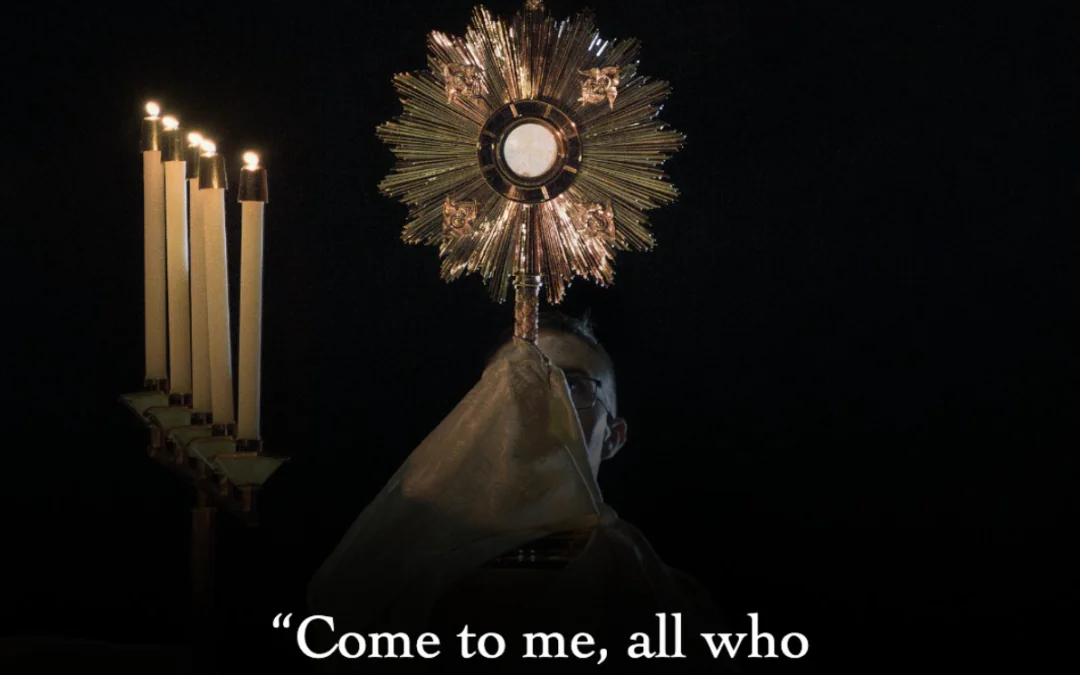
- If you are going through a hard time, are feeling doubtful or anxious about your future, take the time to go and visit Him if the Blessed Sacrament. Put before Him your life and needs.
- Let yourself be embraced by God and open your heart to Him. Trust that He loves you more than you can imagine. You may not understand His plan, but worship Him with strength in times of hardship. Remember: He is God and Almighty.
THE PRAYER OF ABANDONMENT | St. Charles de Foucauld
Father, I abandon myself into Your hands.
Do with me what you will.
Whatever you may do, I thank you.I am ready for all. I accept all.
Let only Your will be done in me,
and in all Your creatures.
I wish no more than this, O Lord.Into Your hands I commend my soul;
St. Charles de Foucauld
I offer it to You with all the love of my heart,
For I love you, Lord, and so need to give myself,
To surrender myself into Your Hands,
Without reserve, and with boundless confidence,
for You are my Father.
Amen.

This article originally appeared here written by Maria Claudia Arboleda and was translated to English by Maria Isabel Giraldo.
Image: Photo by Kamil Pietrzak on Unsplash