This series of four essays addresses as battle domains the four tenets of the prevailing cosmological thinking of our time: Moralistic Therapeutic Deist Universalism. Part 1, Part 2, and each subsequent part provide a means that we must apply daily to allow God to overcome these preponderant tenets.
“What should we do?”
The third battle domain is Modernist Moralism, which defines dominant modern beliefs about Purpose: “What should we do?” Similar to most world religions, Modernist Purpose moves away from Christianity, even though it answers that “God wants people to be nice and good to each other, as taught in the Bible and by most world religions; the goal of life is to feel good about oneself.” This thinking does portray a soul that chooses its own destiny, like Christianity’s free will. Both are unlike the self-regenerative Purpose defined by Hinduism and Buddhism, and the pantheistic, part-into-the-whole Purpose defined by Confucianism and other Eastern religions. Free choice defines both Modernist and Christian Purpose, but Christian choice is whether or not to fulfill God’s agape-love-based Eternal Law, which God pre-designed from the beginning for our perpetual happiness.
Thus, continuing the theme from Parts 1 and 2, like all effective heresies, Modernist Moralistic thinking can mine enough of Christianity to allow Modernists to proclaim themselves Christians; or, since Modernism is sufficiently imprecise, to proclaim themselves members of the other religions mentioned above. But their ironically-named Moralist Purpose describes a god that lacks the consistent, never-changing Truth of the Holy Trinity. For the Modernist Moralists, and those from other religions such as Islam, their deity and its believers define moral Law “as he goes” and “according to his will,” notwithstanding how much this limits the deity’s power, as it becomes subject to the people and the conditions at the time. This heresy began from a 1300s theory speculating that God was seemingly so powerful that He could change His own Eternal Law. But, as Aquinas defends (see ST I, q.22, a.1), in Christianity, God’s will is eternal and unchanging, as God pre-designed. Again, that Christian Eternal Law is agape love, which Christ defines in the Beatitudes and Paul defines in 1Corinthians 13: 4-7. St. Teresa of Avila identifies agape-love as “greater resolutions and desires of pleasing God in everything (IC 4.1).”
Regarding Purpose, Christianity distinguishes itself from Islam, but also Judaism. In Judaism, following God’s pre-designed Law enables salvation for one ancient race by keeping external rules of behavior. In Christianity, God’s Law is pre-designed, but the keeping of outer rules to enact a covenant is a byproduct of the embracing of the Law, enabling the reception of His grace. That is, like Christians, the Israelites did well to live by God’s laws, but their Purpose was to fulfill God’s covenant through revealed and derived rules. Christians (that is, potentially all humans, universally), on the other hand, live by God’s Law for the Purpose of lovingly encompassing the Holy Trinity’s infinite grace.
Given all this “strange doctrine” (Hebrews 13:9) now interwoven into Western culture and life, every Christian must recollect what the Holy Trinity actually wants them to do. This is God’s work, but each Christian must initiate and show openness to this Truth through habit and prayer, which leads to further action.
The Means to Battle Moralistic Purpose: Examination of Conscience
In this third battle domain against Moralism, the specific means to resist this current-age thinking is the Examination of Conscience, a daily reminder of the permanence of Eternal Law. It is the reflecting on how closely the soul loves God by keeping His commandments. But the soul may already live a virtuous life, so following the Ten Commandments, hopefully, is not the problem at hand. So, it is also the reflecting on how to remove the obstacles to living that pre-design, which is to know and agape-love God and those in need.
As we continue in Contemplative Prayer, increasingly one realizes the attachments of the world are out of order, simply because they crowd out the holiness and grace we can experience in prayer and everyday life.
St. John of the Cross uses the metaphor of us facing God through a window of smudges, which are worldly attachments to wipe away to see God (AC, 2.5). Attachments include anything that could lead us to sin, even venially, anything on which one spends too much time, effort, and emotion, to distract us from Contemplative Prayer, the Mass, and other graces. Jesus spoke this to St. Catherine of Siena: “You must know that you are that which is not, but I am That Which Is.” Thus, excessive love of oneself and the world is the love of “things which have no real existence.”
The driftings felt during Contemplative Prayer indicate these attachments that squeeze God from one’s life. Such self-awareness found during prayer forces the soul to confront these distractions. St. John of the Cross writes that jettisoning as many as possible yields fruits: knowledge of God, humility, and freedom from desires. “The only appetite God permits and wants in his dwelling place is the desire for the perfect fulfillment of his Law and the carrying of the cross of Christ (AC, 1.5.8).”
He also reminds us that any denial of self must conform to one’s vocation and state. Also, again, guidance on this emptying of our appetites and faults cannot happen without God’s help.
Guidelines
To allow God to combat the Modernist Moralistic (relativistic) tendencies we all absorb, given the culture that molds us, and to help accomplish this means:
- Derive a basis for daily reflection on the events of the day. To root out common sins, start with existing Examinations of Conscience (for example, here). To eliminate the defects standing in the way of your love for God in prayer, also use the distractions you wrote down from previous prayer times (Part 2). Do the distractions form a pattern? For example, would a Beatitude express what you are working toward?
- Confess your sins and shortcomings to Christ in the certain grace of the sacrament of Confession, at least every two months. This is a guaranteed holy way to purge the obstacles to union with God.
- Use a consistent, daily time to Examine the Conscience. We all require such frequency to overcome the long-imbued thinking that forms us.
- Perfect performance is not necessary; avoid the distraction of scruples, and remember the grace of forgiveness through contrition.
- Before Contemplative Prayer, petition God to help you in these things and to leave these things to other pertinent times, if not for good.
- Pray throughout the day the simple words, “Thy will be done.” Your goal here is to crush the inherent Moralistic tendency to believe and act according to malleable human ways and customs, and to remember the Eternal pre-designed Law by which God wants you to live.
- Memorize and pray this powerful Beatitude: “Blessed are the clean of heart: for they shall see God.” Remember that one needs a purified soul to progress toward unity with God.
Note that we also can promote the Examination of Conscience, based on obstacles to reaching the Indwelling Trinity, to Protestants, for their own efforts to surmount Modernism, as we work toward their ultimate conversion.
Next, the heretical Modernist Universalist (enabling and obligated) god also needs surmounting. So, in Part 4, next week, the daily journey to defeat Moralistic Therapeutic Deist Universalism continues. But, as always, remember that the most significant power behind this battle is God’s, with the soul welcoming that power.

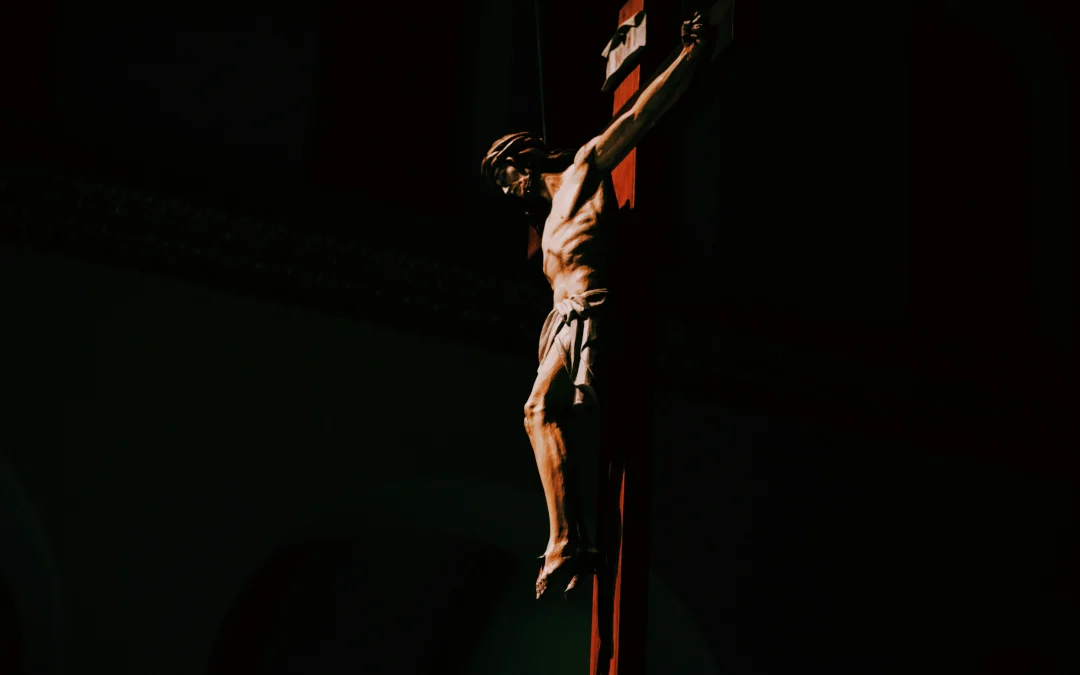
Image: Photo by Ashlyn Ciara on Unsplash