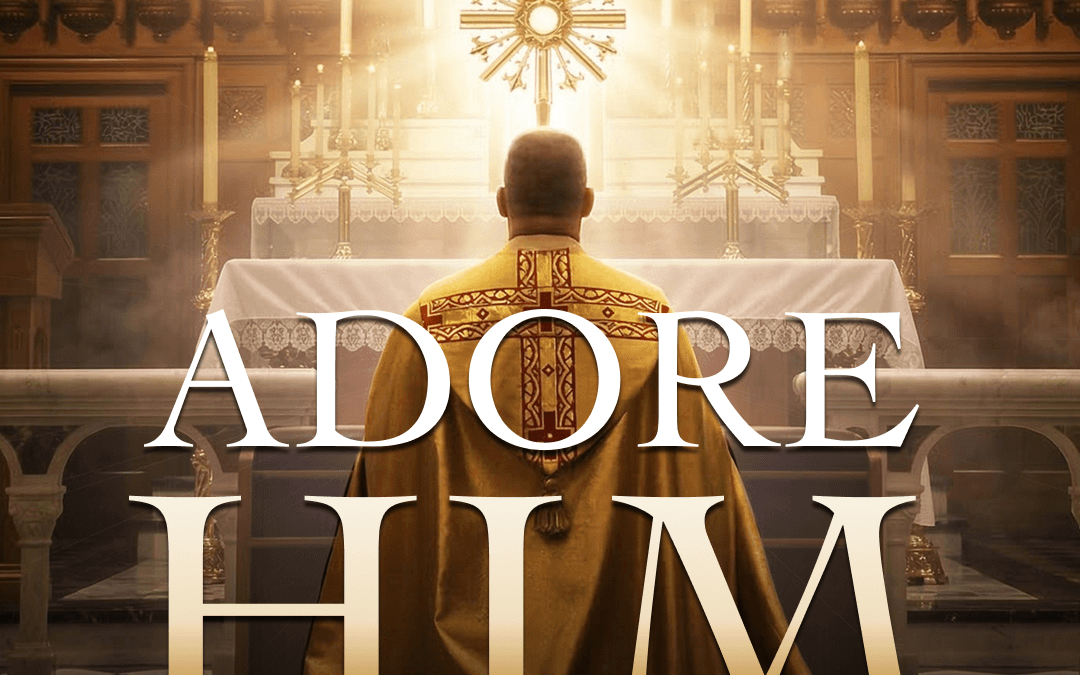
Even if you weren’t aware of their names, or haven’t heard them in Latin, chances are you’re familiar on some level with these two traditional hymns, both composed as prayers by none other than the Angelic Doctor, St. Thomas Aquinas.
In addition to sharing a common origin, these two hymns are very often found together in services of Benediction of the Blessed Sacrament, which is a popular devotion often attached as conclusions to other communal devotional prayers such as Holy Hours, Stations of the Cross, and Eucharistic processions (among others).
Throughout history, they have been set to various melodies for choral prayer. But before they caught the imagination of various Christian composers across the world, they were forged in the slow-burning liturgical furnaces of monastic chant.
O Salutaris Hostia

This hymn is typically sung at the beginning of a Holy Hour upon unveiling the Blessed Sacrament in the monstrance. In the first video below, we hear the Gregorian chant in its most appropriate setting, in front of the Tabernacle:
Meanwhile, many readers will most readily recognize the hymn in the following melody, composed by Anthony Werner. Here is a beautiful and professional choral rendition:
Tantum Ergo
The Tantum Ergo comes from the last two stanzas from the Eucharistic Hymn, Pange Lingua, composed by St. Thomas and is used at Benediction of the Blessed Sacrament. Fun tidbit: a partial indulgence is granted to the faithful who recite it, and a plenary indulgence is granted to those who recite it on Holy Thursday or Corpus Christi.

The response and prayer at the end is a later addition used at Benediction (T.P. stands for Tempus Paschalis / P.T. Paschal Time – in other words, during the Easter season, we add the extra joyful locution, Alleluia!).

Anyone can, of course, pray a holy hour at any time. Ideally, we’d do a private or public holy hour in any Church or chapel with a Tabernacle. Just as often, we will visit the Eucharist exposed in a monstrance in specially designated Adoration chapels. But the Tantum Ergo is actually prescribed, liturgically, for Benediction services.
This one is sung in a more familiar musical setting, at least to American Catholics:
And, since I mentioned it above, here’s the full Pange Lingua (ignore the title that appears on the still for the video).
As an aside, check out this amazing website for finding Adoration chapels in the United States. There’s also the wonderful site, MassTimes.org, you can also toggle a search specifically for Adoration locations!
http://www.therealpresence.org/states/perp.htm