Most people do not withdraw from relationships because they are unloving.
They withdraw because they are wounded.
In families especially, proximity can feel perilous. Wounded history accumulates like unspoken debt. Words linger long after they are spoken. Reactions calcify into rigid expectations. Soon we find ourselves tiptoeing around those we love most, not from lack of affection, but from the quiet dread of being hurt, misunderstood, or diminished once again, or of unintentionally imparting the same.
So we become cautious.
We curate conversations.
We soften our tone.
We keep everything “pleasant.”
We skirt depth, not out of indifference, but out of self-protection.
We remain far short of our best selves and relegate others to the same.
This pattern is especially poignant in families where both sides carry wounds, both feel unseen and misrepresented, and both possess, under the right grace and guidance, the capacity to transcend the stalemate, yet often lack the confidence or the path to do so.
What emerges is a weary cycle:
Both muster courage to gather, steeling themselves against the familiar shadow of how the other “is.”
One speaks or acts in a way that touches a wound, real or perceived.
The other reacts defensively.
The wound reopens, and the blood flows; pain escalates or retreats into silence.
Each filters the present through the lens of past pain.
Both become trapped in roles and narratives they never chose.
Yet here, precisely here, is the hidden mystery of redemption. As Dr. Bob Schuchts, founder of the John Paul II Healing Center and author of Be Healed, has observed from decades of therapeutic and ministerial work, people are far more capable of change and healing than their family stories permit. These raw, bleeding moments, when offered to Christ, become a true participation in His redemptive suffering poured out on the Cross and made present in the Holy Mass. The obstacle is rarely capacity. It is communion.
The Human Story, Told in Tragedy
This dynamic is ancient, woven into the fabric of great literature.
In Shakespeare’s Romeo and Juliet, two young lovers are destroyed not by mutual hatred but by inherited assumptions, miscommunication, and intermediaries. A single letter never arrives. Each acts on incomplete truth. The audience sees the full tragedy; the characters glimpse only fragments. The ruin stems not from malice, but from love without clarity, proximity without understanding.
So too in Sophocles’ Oedipus Rex: catastrophe unfolds because no one holds the complete story. Pride, fear, and haste block patient listening. Reconciliation slips into irreversible loss.
These enduring tales reflect our own lives. We seldom rupture relationships because we do not care. We do it because we care deeply, yet without full presence, without patient listening, without the courage to seek the whole truth.
Families are uniquely prone to reducing one another to fixed identities:
“She is always dramatic.”
“He is not able to really listen.”
“That is just how she is.”
Note the finality of “is,” not merely a description of a fractured moment, but a declaration of unchanging nature. And note its self-imprisoning quality: in protective mode, we shield ourselves from reproach by fixating on another’s wrong, often without considering their background, wounds, or circumstances, or considering our own role.
Over the years, we cease encountering the person present before us and instead react to a caricature shaped by memory, hurt, and projection. Everything new is filtered through the old box.
The irony is stark: most of us resent being confined this way ourselves, yet we unconsciously impose the same limits on others.
Here Christian humility finds its starting point, not in denying real wounds or genuine wrongs, but in admitting that none of us sees clearly or completely. As St. Paul reminds the early Church, unity presupposes imperfection, growth presupposes friction, and love presupposes long-suffering patience. The Body of Christ was formed not among flawless personalities, but among profoundly human ones.
From Caution to Communion
True intimacy does not require pretending difficulties away. It requires building a foundation where truth can be spoken without being weaponized, where needs and boundaries can be named without jeopardizing love itself.
That foundation is deep, abiding regard, a conviction that the relationship’s value is not contingent on agreement, victory, or control. Yet this regard must also honor the objective truth to which we are all accountable, for love that refuses to name what endangers the beloved is no love at all.
This tension becomes especially acute as family roles evolve: children mature into adults, parents relinquish old forms of authority while retaining a prophetic one, and grandparents behold new generations with mingled pride and poignant surrender. Here, parents face their most difficult task: holding fast to God’s revealed guardrails while remaining open to their children’s hearts, even when those children battle or reject what the Church clearly teaches.
In my own life, a fierce moral conviction was forged in what I call my “epiphany year” of 1977, at age ten. Immersed in the television miniseries Roots, The Holocaust, and Jesus of Nazareth, I was pierced by a haunting question: How did so many Christian adults allow such evils? Would I have stood silently in the crowd?
The wound deepened when I encountered a graphic image of an aborted child on a postcard left by my parents. These experiences seared into me a lifelong awareness, intensified as a husband and father, that love is unconditional, yet salvation is not. God has revealed clear contours of truth, guardrails not meant to break others but to allow us all to be gently broken and reformed by grace.
Too often, adult children ask parents to embrace them “as they are” without recognizing that authentic love also expects more of themselves and of one another, especially within the sacred space of the home. The matter is never ultimately between two equal opinions or between parent and child, but between each soul and God. As Joshua declared, “As for me and my house, we will serve the Lord,” even when that choice divides mother from daughter, father from son. Our primary fidelity must be to Christ, lest our silence render faith inconsequential to the very ones who challenge it.
Yet this fidelity need not, must not, close the heart. One of maturity’s hardest and most freeing truths remains: authority anchored in God has no need to defend itself. Insecure authority fights to prove its worth. Secure authority listens, trusts, and waits.
God is never threatened.
Truth is never diminished by patience.
Love is never weakened by restraint.
Jesus embodies this in the parable of the house built on rock: storms come, yet it stands, unshaken, unpanicked.
Communion Before Community
Our digital age intensifies every fracture. Online, people are collapsed into screenshots, isolated statements, and worst moments. Context evaporates. Nuance vanishes. Presence is impossible.
Face-to-face, everything shifts.
Tone carries meaning.
Silence speaks.
Listening itself becomes medicine.
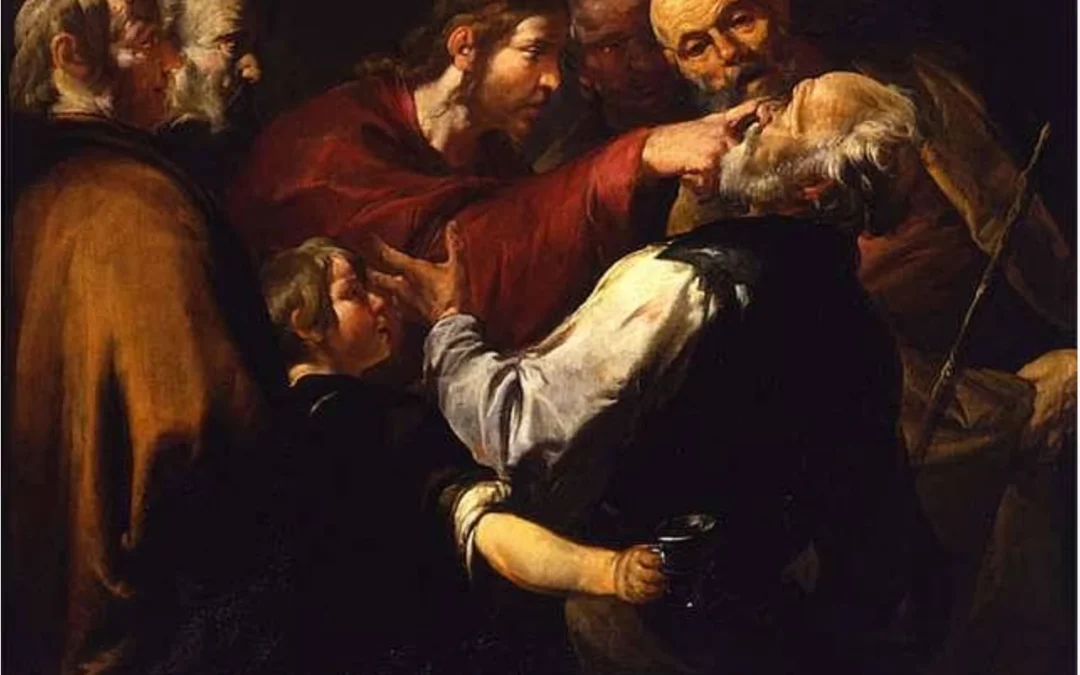
Christianity is irreducibly incarnational. God did not clarify Himself from afar; He drew near in flesh. And every week at Mass, we are schooled anew in this logic: God comes close to heal.
As Schuchts often teaches, drawing from both clinical experience and sacramental theology, “Healing happens organically as love is being expressed.” In the vulnerability of real presence, wounds surface not to destroy but to be met by mercy.
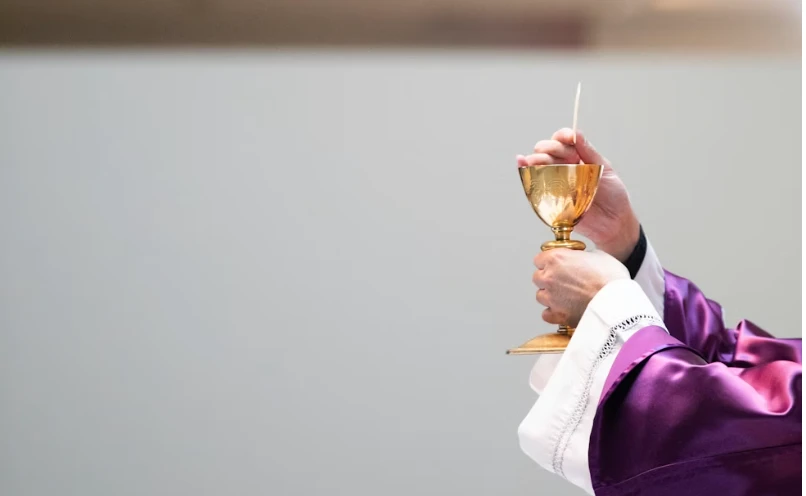
The Church wisely places Holy Communion before any claim to perfect community. We cannot give what we have not first received.
At the altar we are healed before we are sent,
humbled before we are united,
made whole before we are made one.
St. Augustine’s words ring across centuries: “If we receive the Eucharist worthily, we become what we receive.”
Pope Benedict XVI echoed this: “Healing is an essential dimension of the apostolic mission and of Christian faith in its entirety. When understood at a sufficiently deep level, it expresses the entire content of ‘redemption.’” And wholeness (integritas) is the root of holiness.
Dr. Schuchts, who has witnessed countless family reconciliations through prayer and the sacraments, reminds us that God reveals, out of His kindness, our woundedness because He desires to draw us into deeper communion.
From Tragedy to Triumph
Some relationships demand time.
Some demand restraint.
Some call us to love without immediate resolution.
There are seasons when you are right yet must still wait.
When injustice is real, yet retaliation would only poison the soil.
When simple presence matters more than persuasion.
This is not passivity. It is strength submitted to God’s authority, a constancy of receptivity that holds truth firmly while keeping the heart wide open.
Anchored in daily prayer and the Eucharist, the Gospel shifts from a text we quote to a living voice that steadies us amid tension.
The human story begins in fracture and caution.
It is destined for communion and triumph.
The bridge is courage, the courage to move beyond self-protection into vulnerability, beyond rigid boxes into encountering living persons, beyond fear into love rooted securely in God.
Families are not intended as minefields.
They are workshops of redemption, privileged places where God heals us first, so that He might heal the world through us.
When Holy Communion becomes the pattern of our days, received, lived, and offered, family relationships cease to feel like threats. They become the very arena where Christ’s victory unfolds, one patient, truthful, courageous conversation at a time.
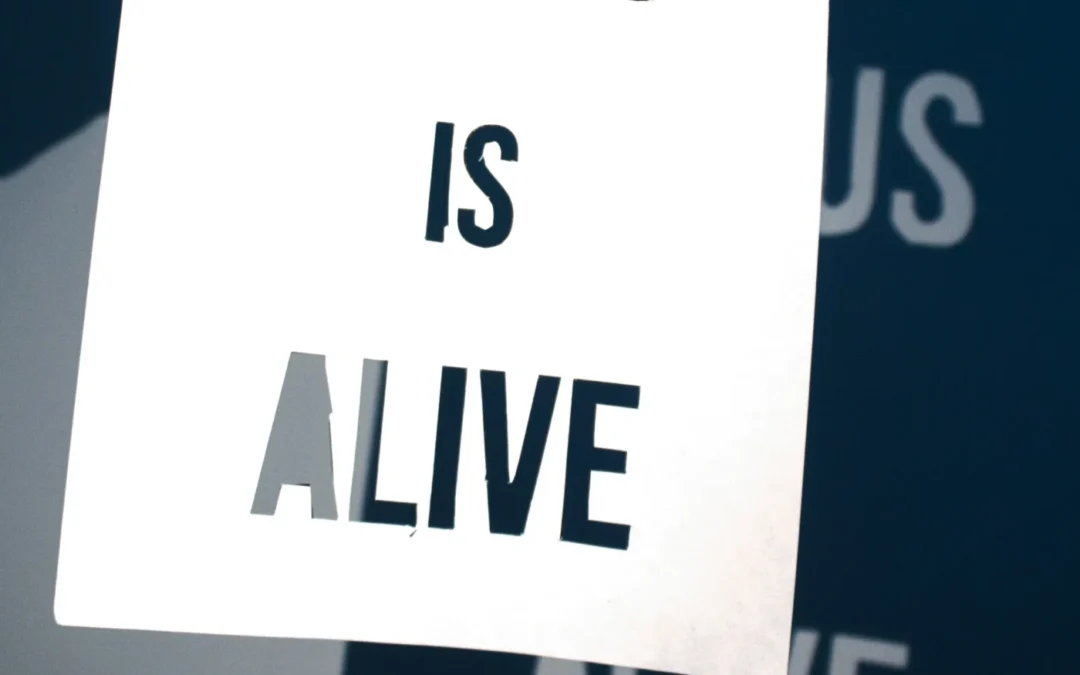
That is the Gospel alive.
And it is still being written in our homes today.

Image: Photo by Yuliia Tretynychenko on Unsplash