Dum medium silentium teneret omnia…”– “While earth was rapt in silence and night only half through its course, your almighty Word, O Lord, came down from his royal throne”
St. John Paul II
(Antiphon to the Magnificat, 26 December).
On this Holy Night the ancient promise is fulfilled: the time of waiting has ended and the Virgin gives birth to the Messiah.
Jesus is born for a humanity searching for freedom and peace; he is born for everyone burdened by sin, in need of salvation, and yearning for hope.
On this night God answers the ceaseless cry of the peoples: Come, Lord, save us! His eternal Word of love has taken on our mortal flesh. “Your Word, O Lord, came down from his royal throne”. The Word has entered into time: Emmanuel, God-with-us, is born.
In cathedrals and great basilicas, as well as in the smallest and remotest churches throughout the world, Christians joyfully lift up their song: “Today is born our Saviour” (Responsorial Psalm).
Mary “gave birth to her first-born son and wrapped him in swaddling cloths, and laid him in a
manger” (Lk 2:7).
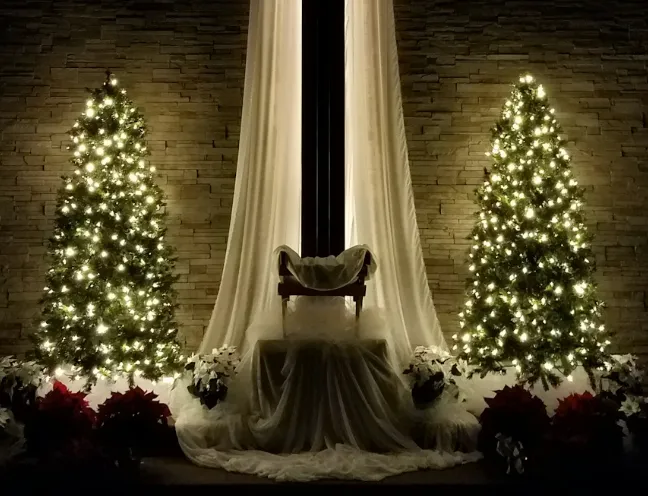
This is the icon of Christmas: a tiny newborn child, whom the hands of a woman wrap in poor cloths and lay in a manger.
Who could imagine that this little human being is the “Son of the Most High” (Lk 1:32)? Only she, his Mother, knows the truth and guards its mystery.
On this night we too can “join” in her gaze and so recognize in this Child the human face of God. We too – the men and women of the third millennium – are able to encounter Christ and to gaze upon him through the eyes of Mary.
Christmas night thus becomes a school of faith and of life.

Image: Photo by Birmingham Museums Trust on Unsplash