“Mommy, what’s wrong? Why are you crying?”
There are some conversations you wish you didn’t have to have with your children.
We had just announced our pregnancy 2 short weeks ago. After a traumatic visit to the ER, I lost my baby at 15 weeks. Not only did I have to go home empty handed, and broken-hearted, but I also had to face my two children waiting for me.
I wish I could say this was the first time, but it actually was the second time this had happened. And I would go on to experience this devastation two more times.
After all four miscarriages I found myself navigating my own grief and devastation while also having to explain to my children why I was crying so much.
How do you explain something so painful, when you’re still trying to make sense of it yourself?
During those moments, I was especially grateful for my background as a school counselor and for my Catholic faith. So much of what I’d learned about helping children process loss suddenly became incredibly personal.
One of the most important things I learned? Children need honest, concrete language, especially when we’re talking about death.
As much as we want to protect our children from heartbreak, phrases like “we lost the baby” or “the baby went to sleep” can actually create more confusion. Young children often interpret those expressions literally. They may wonder if the baby can suddenly be found or become afraid of going to sleep..
It’s okay to use the words died and death. In fact, doing so helps children begin to understand what has happened.
And as Catholic parents, we can pair that honesty with the beautiful hope of our faith.
Here are four questions your children may ask after a miscarriage, along with simple ways to respond.
1. “Where is our baby now?”
You might say:
“We know our baby died, which means their body stopped working and they cannot come home to us. We also know their soul is eternal. We don’t know everything about what happens to our souls after death, but we DO know that Jesus loves children sooo much. We entrust our baby to Jesus and have a lot of hope that our baby is with Jesus.”
What our Catholic faith teaches:
The Church entrusts children who die without Baptism to God’s mercy and teaches that we are permitted to hope for their salvation.
We don’t have all the answers about what happens to these little souls, but we can trust in God’s love and mercy.
Catechism reference: CCC 1261.
2. “Will we see our baby again?”
You might say:
“We hope so! Jesus promises eternal life. Heaven is where we are all striving to be with God forever. We hope and pray that we can be together with our baby in Heaven. Until then, we can pray and trust in God.”
What our Catholic faith teaches:
Heaven is eternal life with God. Jesus has opened the way to Heaven through His death and Resurrection, and the Church encourages us to hope in God’s mercy for children who die without Baptism.
We can speak confidently about God’s love while being honest about the mystery of our baby’s eternal destiny.
Catechism references: CCC 1023–1026, 1261.
3. “Why did God take our baby?”
You might say:
“Sometimes babies die before they are born, and we don’t fully understand why. We know that God loves our baby and loves us. Even though it is sad, we can always turn to God.”
What our Catholic faith teaches:
This is a question that can be just as difficult for parents as it is for children.
The Church teaches that God is good and that He can bring good even out of suffering. But that doesn’t mean we know why a particular baby died.
Sometimes the most faithful answer is simply, “I don’t know why this happened, but I know God loves us.”
Catechism references: CCC 309–314, 1006–1008.
A note for parents: It is worth knowing that the Church does not teach that God directly causes miscarriage or wills the death of a child. CCC 311–314 distinguishes between God permitting suffering and God causing it. Keeping this distinction can help protect a grieving heart against the temptation to blame God or become hardened. Pray for the gift of understanding in these moments.
4. “Can we bring our baby back?”
You might say:
“I wish we could. I wish we could hold our baby, too. But when the baby dies, their body stops working, and they cannot come back to live with us. That’s why we feel so sad. We can still love our baby, remember our baby, and pray for our baby.”
What our Catholic faith teaches:
Death is the end of our earthly life. While we do believe in the hope of the Resurrection and the promise of eternal life, we also live with the reality that someone who has died cannot return to our time on earth.
It can be hard for a child to understand that bodily death is permanent. We can patiently offer the same explanation and let them know that our love for someone doesn’t end with death. We can continue to love and pray for their soul.
Catechism references: CCC 1013, 988–1019.
You don’t have to have all the answers.
If there’s one thing I’ve learned through my own experience, it’s that these conversations can pop up when you least expect them, or at times when you’re already feeling raw and vulnerable.
Give yourself grace. The answers will not be perfect and don’t have to be. The beauty of our Catholic faith is the opportunity to continue honoring and remembering our baby while continuously refining how we talk about it.
I encourage families to remember their child’s anniversary. Each year there’s a new opportunity to talk about the mystery of life, death, and the hope we have in Christ’s Resurrection.
That is truly the heart behind The Gardener. This book was born out of a desire to have a resource to read during each of my babies’ anniversaries. It becomes an opportunity to honor them, and it offers a gentle starting point for some of these important conversations about grief and hope.
Perhaps it can become part of your family’s own tradition of remembering your baby, too.
Because sometimes, we don’t need to have all the answers.
We just need somewhere to begin.
Find it here: https://thelittleroseshop.com/products/the-gardener-miscarriage-child-loss-book
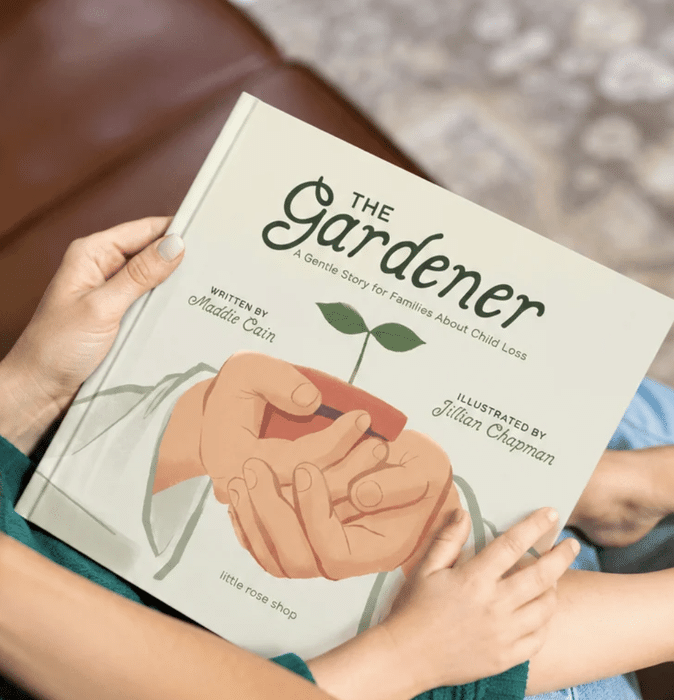
Image: Photo by adrianna geo on Unsplash