We live in an age where truth has been softened into preference. “My truth” and “your truth” sound generous, almost enlightened, but beneath the language is a deeper confusion: truth has been reduced to feeling. It has become negotiable, therapeutic, and adjustable. Yet even if none of us claims perfect metaphysical certainty, there are truths that endure. The dignity of life. The meaning of fidelity. The permanence of the covenant. These are not emotional inventions; they are realities that precede us.
The Catechism reminds us that the human person “tends by nature toward the truth” and is “obliged to honor and bear witness to it.”¹ Truth is not oppression; it is orientation. Historically, the Church has defended these truths not because she delights in restriction, but because she knows something simple: when we sever what is ordered toward life — whether in abortion, euthanasia, or the tearing apart of marriage — we do not liberate ourselves. We destabilize what sustains us.² Truth is structured. And love cannot survive without structure.
But here is what is uniquely Christian: we are not left alone to live inside that structure.
The Apostle Paul describes maturity in terms that apply directly to marriage: “When I was a child, I spoke like a child, I thought like a child, I reasoned like a child; when I became an adult, I put an end to childish ways.”³ Marriage is precisely this movement from childishness to adulthood. A child demands affirmation. A child pounds his fist and says, “I want.” An adult asks, “What is real? What is required?”
Marriage exposes illusion.
It reveals selfishness, pride, insecurity, and fear. And here is where truth begins to hurt — because it unmasks us. It reveals that love is not sustained by emotion alone, but by discipline, honesty, and endurance.
Yet the Church does not present marriage merely as a moral demand. She presents it as a sacrament.
The Catechism teaches that Christian spouses are strengthened because “Christ is the source of this grace.” It continues: “Just as of old God encountered his people with a covenant of love and fidelity, so our Savior… now encounters Christian spouses through the sacrament of Matrimony.”⁴ This is not poetic language. It is theological reality. Christ does not stand outside the marriage demanding perfection. He enters it. He abides in it.
That changes everything.
The Apostle Paul writes that “love rejoices in the truth.”⁵ Not tolerates. Not negotiable. Rejoices. Truth and love are not rivals; they are inseparable. And he urges believers to speak “the truth in love.”⁶ Truth without love becomes harshness. Love without truth becomes sentimentality. But when united, they create maturity.
Scripture describes the Word as “living and active, sharper than any two-edged sword.”⁷ Truth cuts. It cuts through denial. It cuts through rationalization. It cuts through convenient narratives that shield us from responsibility. But the cut is not meant for destruction. It is meant for healing alignment.
And here is the encouragement: sacramental grace makes that alignment possible.
The Catechism explains that the grace of Matrimony “perfects the human love of the spouses, strengthens their indissoluble unity, and sanctifies them on the way to eternal life.”⁸ In other words, the very place where truth wounds pride is the very place where Christ strengthens love.
So how does a couple confront truth without collapsing?
First, through humility. Paul reminds us, “For now we see in a mirror, dimly.”⁹ We are imperfect. We are incomplete. But humility is not weakness; it is the doorway to growth. The Catechism teaches that conscience is a “judgment of reason whereby the human person recognizes the moral quality of a concrete act.”¹⁰ Self-examination is not cruelty. It is the beginning of freedom.
Second, through the sacraments themselves. The grace of marriage is not symbolic. It is operative. The Catechism states plainly: “By reason of their state in life and of their order, [Christian spouses] have their own special gifts in the People of God.”¹¹ Their vocation contains grace proportionate to its difficulty.
Third, through prayer and forgiveness. The sacrament is not a one-day event. It is a living covenant in which Christ remains present. The Catechism assures us that Christ “remains with them, gives them the strength to take up their crosses and so follow him.”¹²
Notice the realism: crosses. Not ease. Not perpetual romance. Crosses.
But never alone.
The alternative to truth is not peace. It is fragmentation. Paul warns of a time when people will accumulate teachers “to suit their own desires.”¹³ That is the age of preference masquerading as truth. But desire does not create reality. Emotion does not determine structure.
Yet Christianity is not merely structure — it is grace within structure.
The truth hurts — but it also heals. And in Christian marriage, healing is not powered by willpower alone. It is sustained by Christ himself, who entered the covenant and refuses to abandon it.
Love rejoices in the truth — because Christ gives us the strength to stand inside it.
Footnotes
- Catechism of the Catholic Church, 2nd ed. (Vatican City: Libreria Editrice Vaticana, 1997), §2467.
- Catechism of the Catholic Church, §2270–2272; §2384–2385.
- 1 Corinthians 13:11 (NRSV).
The Holy Bible, New Revised Standard Version Catholic Edition (NRSV) (Washington, DC: National Council of the Churches of Christ in the USA, 1989), 1 Cor 13:11.
- Catechism of the Catholic Church, §1612–1613.
- 1 Corinthians 13:6 (NRSV).
The Holy Bible, NRSV, 1 Cor 13:6. - Ephesians 4:15 (NRSV).
The Holy Bible, NRSV, Eph 4:15. - Hebrews 4:12 (NRSV).
The Holy Bible, NRSV, Heb 4:12.
- Catechism of the Catholic Church, §1641.
- 1 Corinthians 13:12 (NRSV).
The Holy Bible, NRSV, 1 Cor 13:12.
- Catechism of the Catholic Church, §1778.
- Catechism of the Catholic Church, §1641.
- Catechism of the Catholic Church, §1642.
- 2 Timothy 4:3 (NRSV).
The Holy Bible, NRSV, 2 Tim 4:
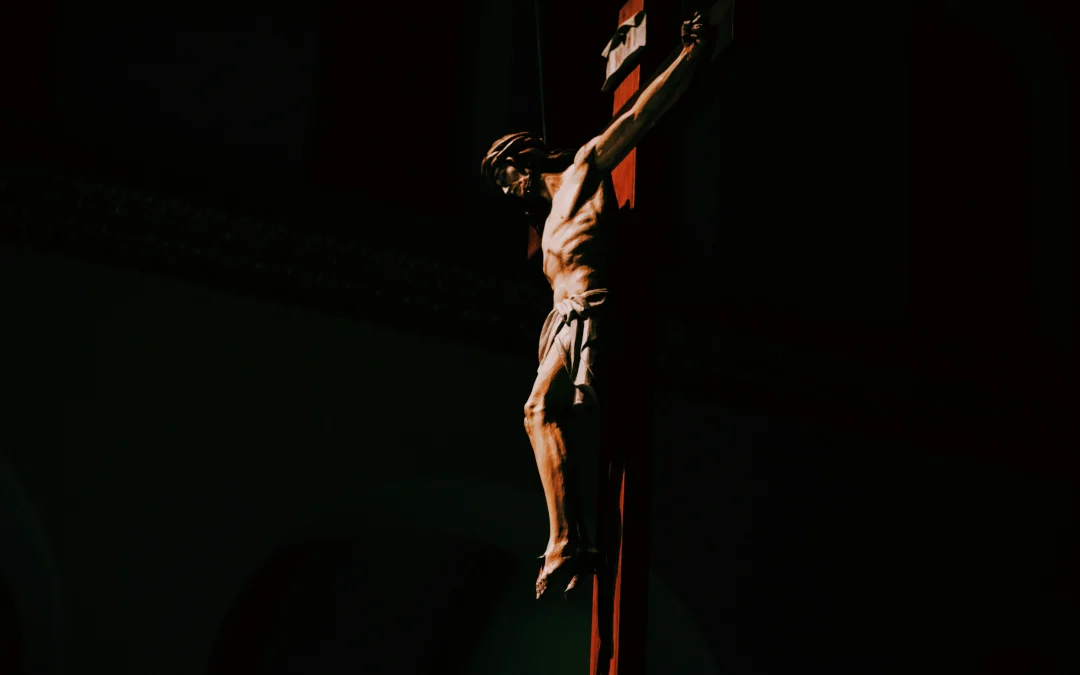
Image: Photo by Sinitta Leunen on Unsplash