Part 1 of 4: The Liturgy of the Hours
In “Our Constrained 21st Century American ‘God’, I picked apart the dominant spiritual and moral belief template of our age: Moralistic Therapeutic Deist Universalism, which was first exposed by Christian Smith and Melinda Denton in 2005. Below are the four cosmological questions and its four summarizing answers:
- Where did we come from? – A God exists who created and orders the world and watches over human life. (Deist)
- How do we fit in? – God does not need to be involved in one’s life, except to resolve problems. (Therapeutic)
- What should we do? – God wants people to be nice and good to each other, as taught in the Bible and by most world religions; the goal of life is to feel good about oneself. (Moralistic)
- Where are we going? – Good people go to heaven. (Universalist)
The underlying predominance of these four tenets today affects everyone’s thoughts, beliefs, and behaviors, from the Nones and Somes to the most devout. These four essays detail the four ancient (Catholic-led) (actually, God-led) practices Christians must start again to use daily to defeat Moralistic Therapeutic Deist Universalism in those four battle domains.
The four battle domains may appear predicated upon the next. But one does not fully overthrow the Modernist tenets in one domain and progress to the next. The Modernist thinking we battle, which the sequence of Moralistic Therapeutic Deist Universalism so well expresses, is a starting point and a rallying cry. So, these essays navigate that sequence. But we fight the war, daily, as a circling between each domain, battling too often on Modernism’s terms and conditions. Perhaps only while ensconced in the fourth domain (Part 4), where God has almost entirely conquered after redefining our battlefield, can evolved yet modern souls safely declare their victory in the other domains.
The prime mover in each of these four domains is grace from the Holy Trinity. But our wills must initiate and accede to this grace, and certainly must align with that work. So, instead of “practice,” “technique,” and “method,” these essays deploy the word “means” to better portray the soul’s action as a humble channel for God to succeed.
Also, except for the titles of each of the four parts, these essays aim to avoid the often-confusing Catholic sinkholes of terminology, such as the types of Contemplative Prayer, Mansions, and Dark Nights, which the saints used diligently and beautifully to explain their unexplainable experiences. Initially, it can bog down those pursuing these paths. For an example summary to further dig into prayer levels and definitions, see this outstanding Crisis Magazine article.
The first battle domain is Modernist Deism, which defines prevailing modern beliefs about Reality: “Where did we come from?” Similar to most other religions, Modernist Reality separates itself from Christianity, given the Modernist operational belief that the most significant Reality confronting humans is either the material world as appearing to the senses, or the mechanical or impersonal-force-god substrate beneath those appearances. To Modernists, the material world is even more consequential than any creator-being. Christianity and other religions like Judaism and Islam, on the other hand, identify the most significant Reality as that which “shows-through” material substance as an absolute and supernatural force. For Christianity, that Reality is the Holy Trinity.
Like all effective heresies, Modernist Deist thinking can wring out enough of Christianity to permit Modernists to deem themselves Christians; or, since Modernism is sufficiently vague, to deem themselves members of other religions. But their Deist Reality characterizes a god that lacks the infinite perfection and power of the Holy Trinity. For the Modernist Deist, their god is “just another being,” the “Intelligent-Designer,” watchmaker-like being who happened to create us and who monitors us from afar. This heresy originated from a 1300s theory supposing that “God’s being and created being are identical in kind” (Hans Boersma, p. 74).
Given all this “strange doctrine” (Hebrews 13:9) now laced through Western culture and life, every Christian must recollect Who the Holy Trinity actually is. This is God’s work, but each Christian must initiate and show openness to this Truth through habit and prayer, which leads to further action.
The Means to Battle Deist Reality: The Liturgy of the Hours
In this first battle domain against Deism, the specific means to resist this current-age thinking is the Liturgy of the Hours, or Divine Office, in Morning and Evening Prayer. These vocal prayers bring to life the Reality of the Divine Nature, enabling God to daily recollect in us where we came from.
Such a prayer is different than the prayer under which many practicing Christians operate: petitionary prayer. Prayers asking God for help, while of course beneficial, fall short by themselves to counter Modernist Deism. In fact, when souls use petitionary prayer exclusively, they prop up the notion of the Therapeutic god (Part 2).
The Liturgy of the Hours, however, as a vocal prayer practiced daily, blares out the infinite, perfect Divine Nature of the Trinity. These ancient hymns, Psalms and other Old or New Testament readings, Intercessions, and consistent Gospel readings (the Canticle of Zachariah in the morning and the Magnificat in the evening) all express the unfathomable power and perfection of God. The use of analogies is thick, but one quickly learns that they attest to the humble knowledge humans possess about our state. They attest to St. Thomas Aquinas’ teachings on analogies as the only way that human souls can learn the Holy Trinity’s infinite and perfect Divine Nature. (See Summa Theologica (ST) I, q.12, a.4.)
Also, know that all over the world, priests and religious, including the Pope and all the Bishops, are speaking the same Scripture and petitions to God. And, of course, supplementing the Liturgy of the Hours with other vocal prayers and readings, such as the Rosary, the Divine Mercy Chaplet, the Angelus, and the study of Scripture and the work of the saints, only helps this means succeed.
Guidelines
To allow God to battle back against the Modernist Deist tendencies we all hold, given the culture that forms us, and to help execute this means:
- Acquire a Breviary book or books, or find an app or website that organizes the readings for you (e.g., https://divineoffice.org/).
- Read, but also intend the words. St. Teresa counsels: “before we begin reciting the Hours or the Rosary, we think Whom we are going to address (Way of Perfection (WP), Ch. 22).”
- Develop the habit with a twice-daily time slot. We all require such consistent frequency to overcome the long-imbued thinking that forms us.
- Pray throughout the day the simple words, “Hallowed be Thy name.” Your goal here is to overthrow the inherent Deist tendency to hold a Reality that constrains God.
- Memorize and pray this powerful Beatitude: “Blessed are the meek: for they shall possess the land.” Remember your own lowliness in relation to the unimaginably perfect and eternal Trinity.
Note that we also can suggest the Liturgy of the Hours to Protestants, for their own efforts to overcome Modernist Deism, as we work toward their ultimate conversion.
Next, the heretical Modernist Therapeutic (convenient and subservient) god also needs overcoming. So, in Part 2, next week, the daily journey to defeat Moralistic Therapeutic Deist Universalism continues. But, as always, remember that the most significant power behind this battle is God’s, with the soul welcoming that power.

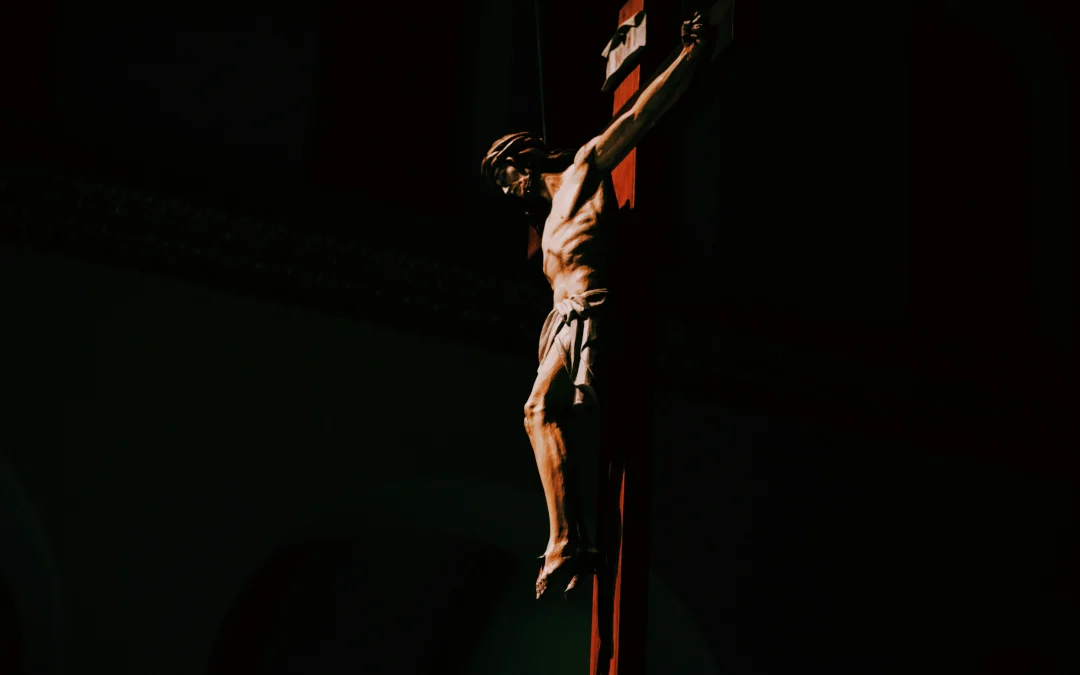
Image: Photo by Rimon Mori on Unsplash