As Jesus passed by he saw a man blind from birth.
His disciples asked him,
“Rabbi, who sinned, this man or his parents,
that he was born blind?”
Jesus answered,
“Neither he nor his parents sinned;
it is so that the works of God might be made visible through him.
We have to do the works of the one who sent me while it is day.
Night is coming when no one can work.
While I am in the world, I am the light of the world.”
When he had said this, he spat on the ground
and made clay with the saliva,
and smeared the clay on his eyes,
and said to him,
“Go wash in the Pool of Siloam” —which means Sent—.
So he went and washed, and came back able to see.His neighbors and those who had seen him earlier as a beggar said,
“Isn’t this the one who used to sit and beg?”
Some said, “It is, “
but others said, “No, he just looks like him.”
He said, “I am.”
So they said to him, “How were your eyes opened?”
He replied,
“The man called Jesus made clay and anointed my eyes
and told me, ‘Go to Siloam and wash.’
So I went there and washed and was able to see.”
And they said to him, “Where is he?”
He said, “I don’t know.”They brought the one who was once blind to the Pharisees.
Now Jesus had made clay and opened his eyes on a sabbath.
So then the Pharisees also asked him how he was able to see.
He said to them,
“He put clay on my eyes, and I washed, and now I can see.”
So some of the Pharisees said,
“This man is not from God,
because he does not keep the sabbath.”
But others said,
“How can a sinful man do such signs?”
And there was a division among them.
So they said to the blind man again,
“What do you have to say about him,
since he opened your eyes?”
He said, “He is a prophet.”Now the Jews did not believe
that he had been blind and gained his sight
until they summoned the parents of the one who had gained his sight.
They asked them,
“Is this your son, who you say was born blind?
How does he now see?”
His parents answered and said,
“We know that this is our son and that he was born blind.
We do not know how he sees now,
nor do we know who opened his eyes.
Ask him, he is of age;
he can speak for himself.”
His parents said this because they were afraid
of the Jews, for the Jews had already agreed
that if anyone acknowledged him as the Christ,
he would be expelled from the synagogue.
For this reason his parents said,
“He is of age; question him.”So a second time they called the man who had been blind
and said to him, “Give God the praise!
We know that this man is a sinner.”
He replied,
“If he is a sinner, I do not know.
One thing I do know is that I was blind and now I see.”
So they said to him,
“What did he do to you?
How did he open your eyes?”
He answered them,
“I told you already and you did not listen.
Why do you want to hear it again?
Do you want to become his disciples, too?”
They ridiculed him and said,
“You are that man’s disciple;
we are disciples of Moses!
We know that God spoke to Moses,
but we do not know where this one is from.”
The man answered and said to them,
“This is what is so amazing,
that you do not know where he is from, yet he opened my eyes.
We know that God does not listen to sinners,
but if one is devout and does his will, he listens to him.
It is unheard of that anyone ever opened the eyes of a person born blind.
If this man were not from God,
he would not be able to do anything.”
They answered and said to him,
“You were born totally in sin,
and are you trying to teach us?”
Then they threw him out.When Jesus heard that they had thrown him out,
he found him and said, Do you believe in the Son of Man?”
He answered and said,
“Who is he, sir, that I may believe in him?”
Jesus said to him,
“You have seen him,
the one speaking with you is he.”
He said,
“I do believe, Lord,” and he worshiped him.
Then Jesus said,
“I came into this world for judgment,
so that those who do not see might see,
and those who do see might become blind.”Some of the Pharisees who were with him heard this
and said to him, “Surely we are not also blind, are we?”
Jesus said to them,
“If you were blind, you would have no sin;
but now you are saying, ‘We see,’ so your sin remains.
The Liturgy of the Catholic Mass Leads Us into a Spiritual Awakening
On Laetare Sunday, the Fourth Sunday of Lent, the Church shifts from its usual focus on penance to celebrate the joy of God’s presence among us. During this liturgy, we are invited to awaken and engage all our spiritual senses, recognizing that through the Mass we can truly see, hear, touch, taste, and smell God in our midst.
The entrance antiphon’s call, “Laetare, Jerusalem,” encourages us to set aside our penitential practices for a time so that we may embrace hope and renewal as we move closer to the joy of Easter.
In the context of today’s Mass readings and their liturgical significance, we remember King David, who sang in Psalm 35:9, “Then my soul will rejoice in the LORD, exult in God’s salvation.” We also recognize the Blessed Mother, who sang in her Magnificat, “My soul proclaims the greatness of the Lord; my spirit rejoices in God my savior.”
The tripartite conception of the soul — as explored by Plato and later examined by Saint Augustine and Saint Thomas Aquinas — posits three distinct aspects of the human person: the rational, which governs thought and wisdom; the spirited, which energizes courage and moral resolve; and the appetitive, which responds to bodily desires and needs.
Origen articulated the tripartite nature in this manner, stating:
“It is the Logos which is at the center of us all, without our knowing, for the center of man is the heart, and in the heart there is the guiding energy of the whole, which is the Logos.”¹
In Catholic theology, these dimensions find resonance in the understanding of body, soul, and spirit — not as mere parallels, but as intricately interconnected facets of the person that collectively reflect the imago Dei, the divine image, in which humanity is created.
Consider entering a cathedral to anchor Plato’s tripartite soul within lived experience. Within this sacred space, your senses perceive the multicolored light through stained glass windows, and your auditory senses discern the echoes of chant or the profundity of silence — responses from the appetitive aspect, attracted to beauty and ambiance.
However, your engagement extends beyond mere sensory perception. Your rational faculties analyze the architecture and symbolism, contemplating their theological significance, potentially leading to reflections on eternity or sacred Scripture. Subsequently, surpassing mere thought, your spirited aspect may be activated — aroused by sacred art, memory, longing, or awe — responding with reverence and moral resolve.
This movement from perception to contemplation to spiritual emotion exemplifies the harmony envisioned by Plato and signifies a soul oriented toward the pursuit of truth.
Building upon this framework, Plato’s tripartite soul corresponds significantly with the Catholic Church’s teaching that the human person, created in the image of God, possesses a distinctive capacity for communion with the divine.
Even through sensory perception, we encounter God. We can genuinely hear, see, feel, smell, and taste His presence in creation and the Sacrament. Because we can perceive God through our senses, we are able to contemplate Him. Because we can contemplate God, we are capable of worship, reverence, response, and obedience toward Him.
This ascending movement from perception to contemplation to devotion exemplifies the spiritual architecture of the soul, ordered toward intimacy with the Creator, so that we may know, love, serve, and find happiness in Him both in this life and in the life to come.
Through the liturgy of the Catholic Mass, God reveals His mercy by allowing us to experience Him through our senses: sight, hearing, taste, touch, and smell. However, His greatest gift is not just awakening our senses, but awakening our rationality — our logos — so that we might come to know the Logos of God.
In knowing God, our soul grows and is animated by the Holy Spirit, becoming more like Him. In other words, the ability to contemplate God enables us to imagine and pursue a life with Him. Misusing this ability by reimagining God as something He is not — either by reducing Him to meaninglessness or confining Him to the unknowable realm of Gnosticism — is a disordered use of this gift.
All those adopted as sons and daughters of God through baptism into the Body of Christ have received the first part of their inheritance — the Holy Spirit who dwells in us. This Spirit gives us the right to call God our Father and to see His Son.
Therefore, those who can see God can see as God. However, this gift is one that grows and matures in us as we work on purification. As Christ Jesus taught, “Blessed are the clean of heart, for they will see God.”² Indeed, a pure heart comes through prayer, penance, and sacrifice.
In today’s First Reading from 1 Samuel 16:1b, 6–7, 10–13a, this journey from perception to contemplation to devotion finds vivid expression. Samuel, attuned to his capacity to hear God, does not choose Eliab based on appearance or expectation. Instead, he listens beyond the surface, discerning God’s desire and anointing David, the least likely candidate in human eyes.
Had Samuel relied solely on natural sight, he would have missed the divine call. But by opening himself to God’s vision, he was stirred to act according to divine wisdom. As the Lord declares, “Not as man sees does God see.”
True spiritual discernment requires allowing each part of the soul to be shaped by grace so that we may respond to God’s voice even when it defies expectation.
In the Second Reading from Ephesians 5:8–14, the Apostle further emphasizes the theme of spiritual awakening, stating, “You were once darkness, but now you are light in the Lord. Live as children of light.”
This exhortation to transformation reflects the soul’s progression from sensory perception to contemplation and ultimately to divine response. Just as Samuel learned to see with God’s eyes, Paul encourages us to walk in the light — revealing what is concealed, discerning what pleases the Lord, and awakening from spiritual slumber to receive Christ’s illumination.
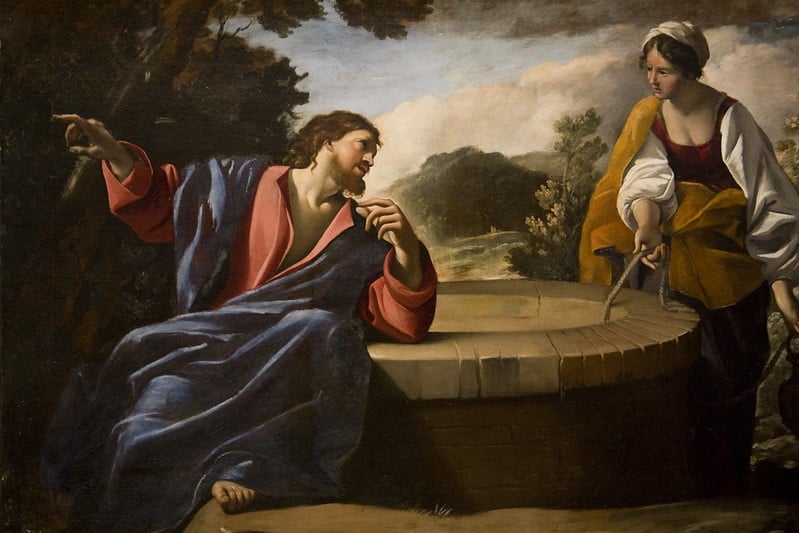
The Gospel from John 9 vividly narrates this reality: a man born blind is healed by Jesus, not merely physically but also spiritually. His journey reflects our own — from blindness to sight, from confusion to confession, from perception to worship.
“I do believe, Lord,” he affirms, and he worships Him.
This sign represents our soul fully awakened, with every aspect — appetitive, rational, and spirited — responding in harmony to the presence of God.
Throughout today’s readings — from Samuel’s insightful gaze beyond Eliab, to Paul’s uplifting call to walk as children of light, to the man born blind who comes to see and worship — one powerful truth shines brightly: God does not see as we see, and a misguided heart perceives only itself.
While our fleeting senses may grasp surface appearances, the Lord perceives the depths of our hearts, recognizing our true needs and gifts. Lent summons us to purify our appetites and hearts, to enlighten our minds, and to awaken our spirits so that every part of us may learn to see through God’s divine perspective.
On this joyful Laetare Sunday, may grace transform our senses, intellect, and emotions, inspiring us to rejoice in His radiant light and to carry the vision of Easter boldly in our hearts, guiding us every step of our renewed journey.
Footnotes
- Joseph Ratzinger, Behold the Pierced One (San Francisco: Ignatius Press, 1986), 67.
- Matthew 5:8.
Looking for more Catholic reflections like this one?
The Liturgical Sense of The Readings at Mass – Year A by David L. Gray offers a transformative journey through the Sunday Mass readings and Holy Days of Obligation, inviting both clergy and laity into deeper communion with the living Word and the rhythm of the Catholic liturgy. Rooted in the Liturgical Sense of the Scriptures, this book reveals the dynamic and mutual illumination between the Word of God and the ritual life of the Church, allowing every reading and prayer to draw the faithful further into the mystery of Christ and the mission of the Church.
Spanning the full structure of the Mass, from the Opening Rite to the Concluding Rite, Gray’s thoughtful commentaries provide a lens through which the Mass and the Bible mutually interpret and enliven one another. Readers are encouraged to go beyond passive attendance and embrace active participation in the sacred mysteries. This volume is more than a guide to Scripture—it is an invaluable resource for homily preparation, personal study, group discussion, and spiritual renewal, challenging all who approach it to contemplate more deeply, pray with greater sincerity, and live with intentionality as missionary disciples.
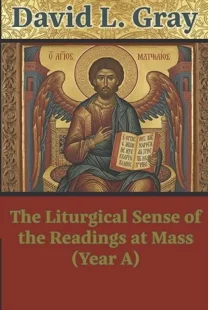

Image: https://picryl.com/media/gioacchino-assereto-christ-healing-the-blind-man-e94e26