After the Feast of the Baptism of the Lord, Years A and C in our Sunday liturgical calendar use readings from Isaiah for the first reading and from the first chapter of John for the Gospel. Year B features readings from First Samuel and the second chapter of John, which recounts the Theophany of the Wedding Feast at Cana. Despite the different cycles, the message for the Second Sunday in Ordinary Time remains consistent: that God has called us to serve Him and fulfill His holy will in the world. This reminder is especially meaningful following Christmas and Epiphany, which celebrate Christ’s arrival into the world and the Magi’s visit from the East. It underscores that we, too, have a calling on our lives and that we won’t fully realize our true selves or who we were created to be unless we respond rightly to that call.
In the First Reading from Isaiah 49:3, 5-6, we observe the first of three oracles by Deutero-Isaiah concerning the Suffering Servant. While it is not as explicitly identified in this oracle that the Suffering Servant refers to the future Messiah as it is in subsequent oracles,8 certain clues within these verses suggest such an identification. In verse one, the oracle addresses the coastlands and distant peoples; consequently, the message appears to transcend Judea and Israel. Additionally, in verse one, the oracle shifts to the first person, stating, “Before birth the Lord called me, from my mother’s womb he gave me my name,” which bears a resemblance to Jeremiah 1:5, where it is said, “Be fore I formed you in the womb, I knew you …” Further more, in verse five, it is written, “For now the LORD has spoken who formed me as his servant from the womb, That Jacob may be brought back to him and Israel gathered to him.” In verse two of this chapter, the phrase “He made my mouth like a sharp-edged sword” echoes the depiction in the book of Hebrews of the Word of God as “… living, and powerful, and sharper than any two-edged sword.” Lastly, in verse six, the statement “I will make you a light to the nations, that my salvation may reach to the ends of the earth,” emphasizes the universal scope of this oracle; it signifies that God’s call extends to a worldwide community of His people. In the Gospel of John, Jesus refers to Himself as “the Light of the world,” through whom salvation is attained.9
The Second Reading from First Corinthians 1:1-3 today underscores, with amplified emphasis, the significance of our calling. It states that “Paul, called to be an apostle of Christ Jesus by the will of God,” was summoned, along with “Sosthenes our brother,” and that those “of the Church of God that is in Corinth” have been “called to be holy.” Furthermore, it affirms that “all those everywhere who call upon the name of our Lord Jesus Christ, their Lord and ours,” are encompassed. I appreciate Paul’s wordplay here, illustrating that those who have been called are those who invoke the name of Jesus Christ, establishing a vital connection between the elect and Christ Jesus, the Elect. For we possess nothing without Him, who brings forth creation from nothingness. Even our calling in life relies upon Him, who delivered the Word of eternal life. It is through
The Liturgical Sense of the Readings at Mass (Year A)
Him and His grace that our calling is sustained, enriched, propelled, and strengthened. There exists no genuine calling in this existence outside of Him, who was sent to those whom He calls to attain true life in Him.
In today’s Gospel Reading from John 1:29-34, John the Waymaker demonstrates a profound understanding of this necessity greater than anyone else. He recognizes that the calling on one’s life cannot be fully understood or realized until one acknowledges that it is dependent upon the coming of Christ into the world. “John the Waymaker saw Jesus approaching and proclaimed, “Behold, the Lamb of God, who takes away the sin of the world. He is the one of whom I said, ‘A man is coming after me who ranks ahead of me because he existed before me.”’
The Liturgical Season of Ordinary Time begins in a beautiful and meaningful way. We walk alongside the Magi, heading east toward Mount Calvary, where we will arrive on the Easter Vigil. Today’s message is full of hope and clarity: you are warmly called to follow Christ Jesus wherever He leads. The Holy Mass is such an important part of our life as a Church — a gentle reminder every day, especially on Sundays and special days, of what it truly means to be obedient to that call.
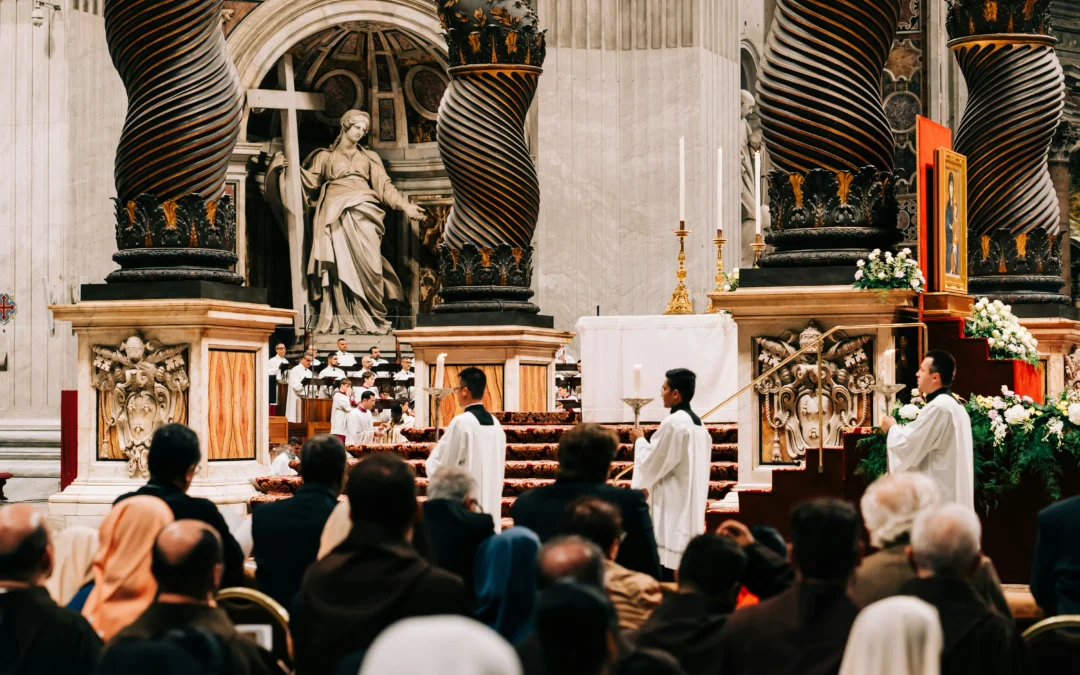
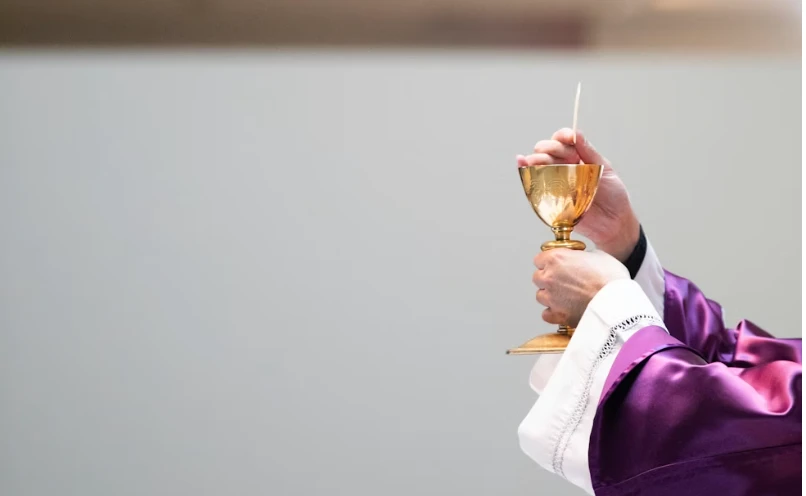
Whether we are moving, sitting, kneeling, chanting, or singing, we are constantly engaged in prayer, confession, and listening — these are the ways liturgy shapes us, guiding us in the key skills of discipleship, friendship, and service. Plus, the liturgy patiently helps us trust in our walking and waiting — because we are not on this journey alone or on our own schedule. He who called us will lead us closer to perfection, guiding us through every suffering, trial, and blessing. The most important thing we can do is keep returning to the place He calls us, where we find nourishment with the food that sustains us on this beautiful, ongoing journey.
8 Isaiah 50:4-11 and 52:13-53:12
9 John 8:12.
Looking for more reflections like this one?
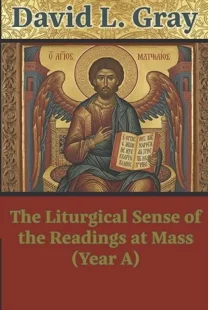
The Liturgical Sense of The Readings at Mass – Year A by David L. Gray offers a transformative journey through the Sunday Mass readings and Holy Days of Obligation, inviting both clergy and laity into deeper communion with the living Word and the rhythm of the Catholic liturgy. Rooted in the Liturgical Sense of the Scriptures, this book reveals the dynamic and mutual illumination between the Word of God and the ritual life of the Church, allowing every reading and prayer to draw the faithful further into the mystery of Christ and the mission of the Church.
Spanning the full structure of the Mass, from the Opening Rite to the Concluding Rite, Gray’s thoughtful commentaries provide a lens through which the Mass and the Bible mutually interpret and enliven one another. Readers are encouraged to go beyond passive attendance and embrace active participation in the sacred mysteries. This volume is more than a guide to Scripture—it is an invaluable resource for homily preparation, personal study, group discussion, and spiritual renewal, challenging all who approach it to contemplate more deeply, pray with greater sincerity, and live with intentionality as missionary disciples.